How to Damp Proof a Basement
A damp basement can cause problems throughout your entire property. This guide explains how to diagnose the cause of basement damp, choose the right treatment, and transform a wet, unusable basement into dry, valuable space.
Request an Inspection
Leave us your details and we'll be in touch
Why Basements Get Damp in Suffolk, Norfolk & Essex
Basements are inherently vulnerable to damp because they are surrounded by earth on most or all sides. Moisture reaches basement walls and floors through several mechanisms, and understanding these is essential for choosing the right treatment approach.
Capillary moisture is drawn through porous masonry or concrete in the same way that a sponge absorbs water. The walls and floor of a basement in contact with damp soil will gradually absorb moisture, which migrates to the internal surface. This process is slow but continuous, and results in walls and floors that feel damp, develop salt deposits, and support mould growth.
Hydrostatic pressure occurs when the water table rises to the level of the basement. Groundwater under pressure will force its way through any crack, joint, or weakness in the structure. This can result in visible water ingress — water running down walls, seeping through floor cracks, or pooling on the floor. In East Anglia, the water table can fluctuate significantly with the seasons, meaning a basement that is dry in summer may experience water ingress in winter and spring.
Condensation is often overlooked as a cause of basement dampness. Basements are naturally cooler than the rooms above, and when warm, moist air from the upper floors enters the basement, it condenses on the cold walls and floor. This is particularly common in summer when the temperature difference between the warm outside air and the cool basement is greatest.
Damp Proofing Methods for Basements in Suffolk, Norfolk & Essex
1. Damp Proof Membranes (DPM)
For basements where the dampness is caused by capillary moisture rather than pressurised water ingress, a damp proof membrane can be an effective solution. There are two main types:
Sheet Membranes
Heavy-gauge polyethylene or polypropylene sheet membranes are laid over the floor and can be fixed to walls. For floors, the membrane is laid over the existing slab with joints overlapped and sealed, and a new floor screed or floating floor is installed on top. For walls, the membrane is mechanically fixed and then covered with plasterboard or render. Sheet membranes provide a physical barrier that prevents moisture reaching the internal surfaces.
Liquid Applied Membranes
Bituminous or polymer-based liquid membranes can be brushed, rolled, or sprayed directly onto the floor slab and wall surfaces. Multiple coats are applied to build up the required thickness. Liquid membranes are particularly useful for irregular surfaces and complex details where sheet membranes are difficult to install. They must be applied to clean, dry, and properly prepared surfaces.
2. Cavity Drain Membrane Systems
For basements that experience more than simple capillary dampness — or where maximum reliability is required — a cavity drain membrane system (Type C waterproofing) is the preferred approach. This system uses a studded plastic membrane fixed to walls and floor that creates a narrow cavity behind it. Any moisture that passes through the structure runs down behind the membrane and is collected in perimeter drainage channels, which direct it to a sump where it is pumped away automatically.
The beauty of this system is that it does not try to stop water entering the structure — it simply manages any water that does enter. This means it is tolerant of minor structural movement, and there is no bond to fail. It is the most widely used and reliable system for retrofitting waterproofing to existing basements in the UK.
3. Cementitious Tanking
Cementitious tanking slurries are multi-coat cementitious coatings applied to the internal surfaces of basement walls and floors. They penetrate into the substrate and create a crystalline barrier that blocks the passage of water. This is a Type A (barrier) waterproofing system.
Tanking slurries work well for moderate dampness and low levels of water pressure. They are most effective on dense, sound substrates like concrete or dense brick. They are less suitable for rubble-filled walls, very porous masonry, or situations where significant structural movement is likely. The key to success with tanking slurries is thorough surface preparation — the substrate must be clean, sound, damp (but not wet), and free from contaminants.
4. Improving Ventilation
Regardless of which damp proofing method is used, adequate ventilation is essential for a dry basement. Without proper air circulation, condensation will form on cold surfaces and create the appearance of ongoing damp even after the structure has been treated. Options include:
- Natural ventilation through air bricks at high and low level on opposite walls to create cross-ventilation
- Mechanical extract ventilation using low-energy fans that run continuously or on a humidistat
- Positive input ventilation (PIV) units that push dry air into the space
- Heat recovery ventilation systems for habitable basement rooms that need to balance ventilation with energy efficiency
Signs Your Basement Needs Damp Proofing in Suffolk, Norfolk & Essex
You should consider having your basement assessed for damp proofing if you notice any of the following:
- A persistent musty or damp smell, even when the basement appears visually dry
- White salt deposits (efflorescence) on walls or floor surfaces
- Visible damp patches, staining, or discolouration on walls
- Mould growth on walls, ceilings, stored items, or furniture
- Peeling paint, blistering plaster, or crumbling mortar joints
- Condensation forming on windows, pipes, or cold surfaces in the basement
- Timber decay in floor joists, skirting boards, or any timber in contact with basement walls
- Damp problems in the ground floor rooms above the basement
- Water pooling on the floor during or after heavy rainfall
- A cold, clammy feeling in the basement even during warm weather
The Impact of a Damp Basement on Your Property in Suffolk, Norfolk & Essex
A damp basement does not just affect the basement itself — it can cause problems throughout the property. Damp air from the basement rises through the ground floor via gaps around pipes, through floorboards, and through the natural stack effect of warm air rising through the building. This can cause:
- Condensation and mould in ground floor rooms, particularly in corners and behind furniture against external walls
- Timber decay in ground floor joists that bear into the basement walls, leading to springy or sagging floors
- Increased heating costs as damp masonry conducts heat more readily than dry masonry
- Damage to any items stored in the basement, including furniture, books, clothing, and electronics
- Reduced property value — a damp basement is a red flag for potential buyers and their specialists
- Health risks from mould spore exposure for all occupants of the property, not just those who enter the basement
Need Your Basement Damp Proofed?
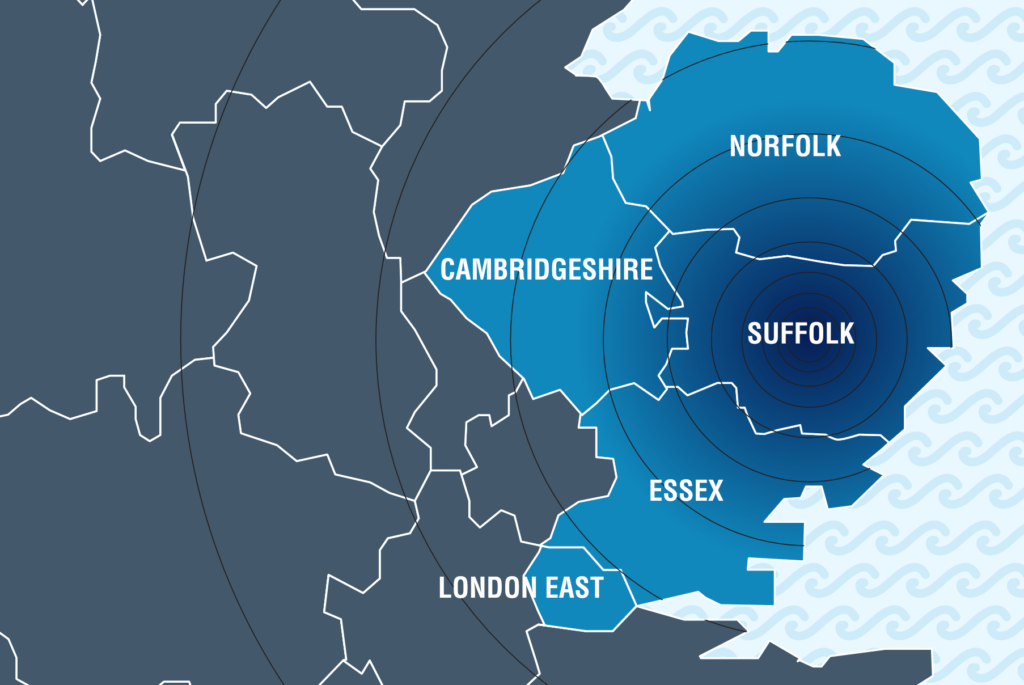
KDS Property Preservation provides expert basement damp proofing across Suffolk, Norfolk and Essex. We assess the cause, recommend the most effective solution, and carry out the work to transform your basement from a damp liability into a dry, usable asset. Contact us for a free inspection.