Damp Proofing Questions Answered
Got a question about damp, mould, timber treatment, or waterproofing? Browse our comprehensive FAQ below or use the chatbot to find quick answers.
Damp Proofing
Rising damp occurs when groundwater travels upwards through porous masonry by capillary action, bypassing or overcoming the damp proof course (DPC). Common signs include a visible tide mark on internal walls (usually up to one metre high), peeling wallpaper, blown plaster, white salt deposits, and a musty smell. If you suspect rising damp, we offer free inspections to diagnose the issue accurately.
Penetrating damp is caused by water entering through the external walls of a building, often due to defective pointing, cracked render, faulty guttering, or porous brickwork. Unlike rising damp, it can appear at any height on a wall and is often worse during heavy rainfall. We can trace the source and apply the appropriate treatment, from repointing to external waterproof coatings.
Damp proof injection involves drilling a series of holes along the base of the affected wall at regular intervals. A silicone-based damp proofing cream is then injected into these holes, where it diffuses through the masonry to create a new chemical damp proof course. This barrier prevents moisture from rising any further. The treatment is minimally disruptive and highly effective when installed correctly.
Yes. After damp proofing works, the existing contaminated plaster must be removed and replaced with a salt-resistant renovating plaster system. Standard plaster will simply draw up salts and moisture from the wall, causing the same problems to reappear. Our specialist damp proof plastering creates a breathable, salt-resistant barrier that allows the wall to dry out properly.
When moisture travels through masonry, it carries dissolved mineral salts. As the water evaporates from the wall surface, these salts are left behind as white crystalline deposits (efflorescence). Salt contamination can damage plaster and decorations, and must be addressed as part of any damp treatment programme. We remove contaminated plaster and apply salt-inhibiting systems.
Timber Treatment
The most common sign of woodworm (wood-boring beetle) is small round exit holes in timber, typically 1-2mm in diameter. You may also notice fine powdery dust (frass) beneath the affected timber, crumbling edges on boards or joists, and occasionally adult beetles near windows in spring and summer. Not all infestations are active, so a professional assessment is important before treatment.
Dry rot (Serpula lacrymans) is the most destructive form of timber decay in buildings. It can spread rapidly through masonry and behind plaster to attack timber in other areas. If left untreated, it can compromise the structural integrity of floor joists, roof timbers, and lintels. Early detection and professional treatment are essential. We identify the full extent of the outbreak and eradicate it completely.
Dry rot is caused by the fungus Serpula lacrymans and can spread through masonry, making it particularly destructive. Wet rot is caused by various fungi (most commonly Coniophora puteana) and is generally confined to the area of dampness. Wet rot requires a higher moisture content to thrive and usually stops spreading once the moisture source is removed. Both need professional treatment, but dry rot typically requires more extensive remedial works.
Timber treatment involves applying a professional-grade preservative solution to affected and at-risk timbers. For woodworm, this is typically sprayed onto all accessible timber surfaces. For rot, the decayed timber is cut back to sound wood, and replacement timbers are pre-treated before installation. Remaining timbers in the affected area are treated with fungicidal solution to prevent reoccurrence.
Waterproofing
Basement tanking is the process of making a below-ground structure watertight. It involves applying waterproof coatings, membranes, or cementitious systems to the internal walls and floor to prevent water ingress. Tanking is essential for converting a cellar or basement into a usable, habitable space. We design systems compliant with BS8102 to ensure long-lasting protection.
Yes, with the correct waterproofing system in place, many cellars can be converted into valuable living spaces such as home offices, gyms, media rooms, or additional bedrooms. The key is ensuring a robust waterproofing design that manages hydrostatic pressure and prevents any water ingress. We handle everything from waterproofing design through to completion.
A tanking membrane is a studded or dimpled sheet (usually HDPE plastic) that is fixed to basement or cellar walls. It creates a physical barrier and an air gap that allows any residual moisture to drain harmlessly to a sump pump system. This type of waterproofing is known as a 'Type C' cavity drain system and is one of the most reliable methods for below-ground waterproofing.
Yes. Structural waterproofing covers a range of systems designed to protect below-ground structures from water ingress. This includes Type A (barrier protection), Type B (structurally integral protection), and Type C (drained protection). We assess each project individually and recommend the most appropriate system — or a combination — based on the specific conditions of your property.
Condensation & Mould
Black mould (Aspergillus niger) thrives in damp, poorly ventilated areas. It is almost always caused by condensation — warm moist air hitting cold wall surfaces. Common contributors include inadequate ventilation, lack of insulation, drying clothes indoors, and blocked air vents. While cleaning removes the mould temporarily, the underlying cause must be addressed to prevent it returning.
A Positive Input Ventilation (PIV) unit is installed in the loft space and gently introduces filtered, tempered fresh air into the property. This continuous airflow dilutes and displaces moisture-laden air, reducing humidity levels and preventing condensation from forming. PIV units are energy-efficient, virtually silent, and one of the most effective long-term solutions for condensation and mould problems.
Condensation itself is not structural damage, but prolonged condensation can lead to mould growth, timber decay, and damage to plaster and decorations. In severe cases, persistent dampness from condensation can contribute to wet rot in window frames and skirting boards. The good news is that condensation is usually straightforward to resolve with improved ventilation and insulation.
Anti-condensation paint contains insulating microspheres that raise the surface temperature of the wall, reducing the likelihood of condensation forming. While it is not a standalone solution for severe problems, it can be very effective as part of a combined approach alongside improved ventilation. We recommend it for kitchens, bathrooms, and bedrooms where condensation is a recurring issue.
Insulation
We offer several internal wall insulation options including thermal plasterboard (insulated backing board), thin-wall aerogel insulation for where space is limited, and traditional insulated dry-lining systems. The right choice depends on the wall construction, available space, and your budget. We assess each property and recommend the most effective solution.
In many cases, yes. Spray foam insulation can cause significant problems including trapped moisture, timber decay, and difficulties with property sales and mortgage applications. Many lenders now refuse mortgages on properties with spray foam in the roof space. We offer professional spray foam removal services to restore your loft space and resolve any associated issues.
Proper loft insulation helps maintain consistent temperatures throughout your home, which reduces the temperature difference between warm indoor air and cold wall/ceiling surfaces. This in turn reduces condensation, which is a major contributor to damp and mould problems. Combined with adequate ventilation, good insulation is one of the best defences against condensation-related dampness.
Suspended floor insulation involves fitting insulation material between the floor joists of a suspended timber floor. This prevents cold air from the sub-floor void rising into your living space, making ground-floor rooms significantly warmer and reducing energy bills. We use high-performance insulation netting systems that are installed from below without disturbing your existing flooring.
Exterior Coatings
Exterior wall coatings are specialist weatherproof finishes applied to the outside of your property. They create a durable, water-resistant barrier that protects brickwork and render from rain penetration whilst remaining breathable. Available in a wide range of colours or as clear coatings that preserve the natural appearance of your brickwork, they typically last 15-20 years.
Rendering involves applying a new layer of cement, lime, or silicone-based material directly to the external walls, creating a new surface finish. Wall coatings, on the other hand, are applied as a spray or brush-on finish over existing brickwork or render. Both provide weather protection, but rendering also addresses surface defects and can include insulation (EWI systems).
Yes. Our roof coating service cleans, repairs, and applies a protective coating to your existing roof tiles. This extends the life of your roof, improves its appearance, and provides additional weather protection. Roof coatings are a cost-effective alternative to a full roof replacement and are available in various colours to match or update the look of your property.
General & Pricing
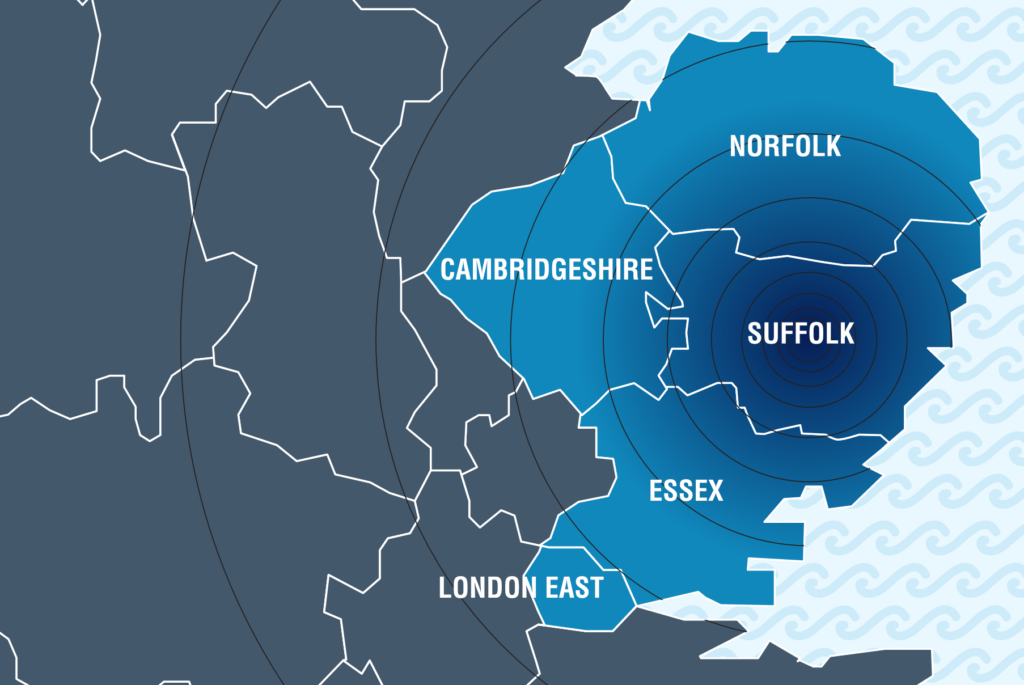
Yes, we offer free, no-obligation damp inspections across Suffolk, Norfolk, and Essex. One of our experienced technicians will visit your property, assess the problem using professional moisture meters and thermal imaging equipment, and provide you with an honest diagnosis and clear explanation of the recommended treatment. There is no pressure and no hidden costs.
We cover the whole of East Anglia, including Suffolk, Norfolk, and Essex. Our main service areas include Ipswich, Bury St Edmunds, Norwich, Colchester, Chelmsford, Lowestoft, Great Yarmouth, and all surrounding towns and villages. We are happy to travel to assess your property wherever you are in the region.
The cost of damp proofing varies depending on the type of damp, the extent of the problem, and the size of the affected area. As a guide, a straightforward rising damp treatment for a single wall might start from around £400-£600, while a full property treatment including replastering could range from £2,000-£5,000+. We provide fixed-price quotations after our free inspection so you know exactly what to expect — no surprises.
Yes. All our damp proofing, timber treatment, and waterproofing works come with comprehensive written guarantees. Damp proof course installations typically carry a 20-year guarantee, timber treatments a 20-year guarantee, and waterproofing systems vary depending on the specification. Our guarantees are insurance-backed for your peace of mind.
Most damp proofing works for a typical domestic property can be completed within 2-5 days, depending on the extent of the treatment required. This includes injection of the new damp proof course, removal of contaminated plaster, and application of the new renovating plaster system. Drying times for the new plaster are typically 4-6 weeks before redecoration.
In most cases, yes. Damp proofing, timber treatment, and most other works can be carried out while you remain living in the property. We work room by room where possible and always keep disruption to an absolute minimum. For major waterproofing projects or extensive dry rot treatment, we will discuss any temporary arrangements needed before work begins.
Booking a free inspection is easy. You can call us directly on 01473 561 031, fill in the online booking form on our website, or send us an email. We aim to arrange inspections within a few working days and will find a time that suits you. Evening and weekend slots are sometimes available on request.