KDS Property Preservation
    Structural Waterproofing
    100+ 4.9-Star Reviews

    Structural Waterproofing

    Types A, B & C — protecting below-ground structures against water from the ground.

    10+

    Years Experience

    100%

    Satisfaction

    Request an Inspection

    Leave us your details and we'll be in touch

    What Is Structural Waterproofing in Suffolk, Norfolk & Essex?

    Waterproofing is the process of making an object or structure waterproof or water-resistant so that it remains relatively unaffected by water or resists the ingress of water under specified conditions. Buildings all around the country rely on structural waterproofing systems to protect below-ground spaces.

    Structural waterproofing is a general term within the industry that covers methods and treatments used to waterproof any structure. It is applicable to any construction underground or below ground level — basements, cellars, lift pits, underground car parks, and retaining walls.

    It is important to distinguish between waterproofing and damp proofing. Waterproofing refers to preventing the penetration of water in its liquid state, possibly under pressure. Damp proofing refers to resistance to humidity or dampness, covering methods and treatments used to prevent damp from being absorbed through walls or floors into the interior of a structure above ground.

    BS 8102:2022 Code of Practice in Suffolk, Norfolk & Essex

    BS 8102:2022 — Code of Practice for the Protection of Below Ground Structures Against Water from the Ground — is the British Standard which gives recommendations and provides guidance on methods of dealing with and preventing the entry of water from surrounding ground into a structure at below ground level.

    It states that there are 3 types of waterproofing protection:

    A

    Type A (Barrier) Protection

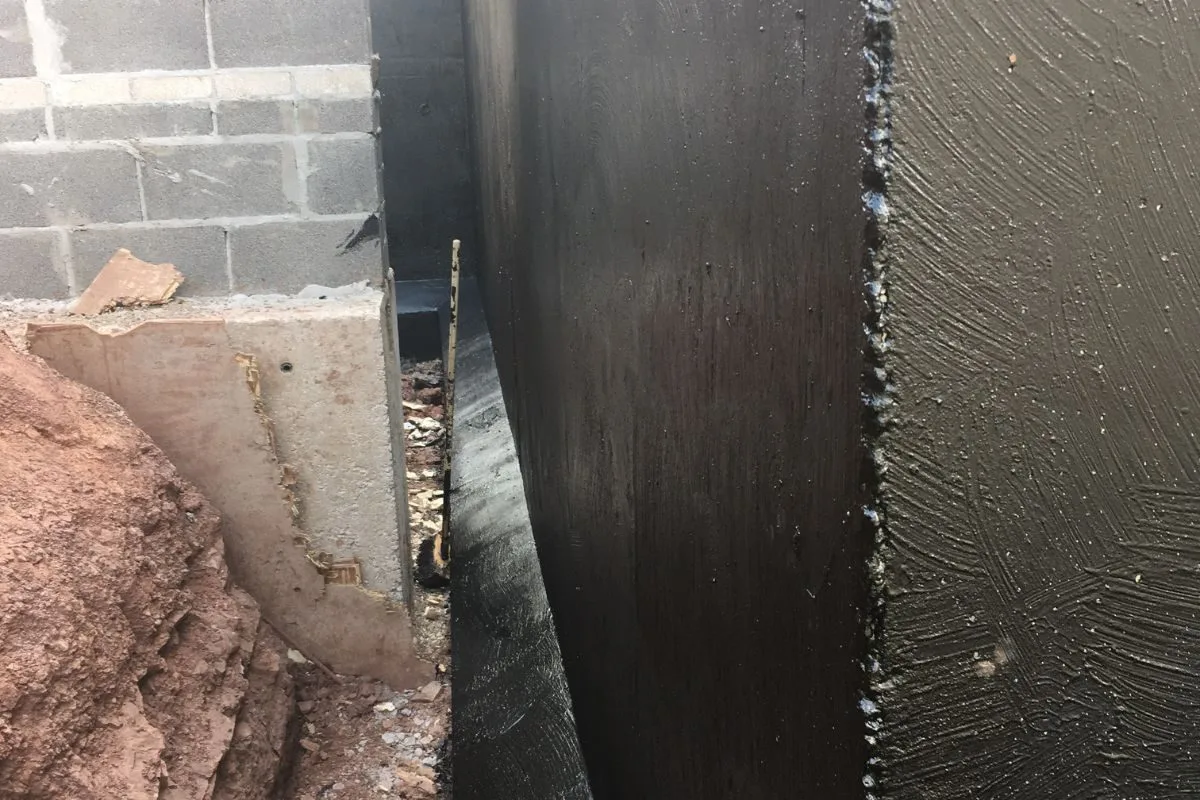
    Type A (Barrier) Protection, also historically referred to as "tanking", provides protection against groundwater ingress by applying a waterproof material to the internal or external walls and floor slab of a basement or underground structure, forming a barrier between the structure and any groundwater present.

    Historically, methods for Type A systems have included internal, external, and sandwich applications. The materials can be pre-applied or post-applied to the external or internal surface of the retaining structure. They are best suited to external installations in new-build structures and, in most cases, cannot be installed externally to existing structures, so they are generally applied internally.

    Type A materials include liquid-applied membranes, cementitious slurries and renders, post-applied bonded sheet membranes, and pre-applied fully bonded sheet membranes. Type A systems are designed to form a continuous "tank" — without any holes or defects — to provide true protection. The bond formed between the waterproofing and the substrate is critical, so careful surface preparation is essential before installation.

    Best Suited For

    New-build structures where external access is available, storage areas, plant rooms, and utility spaces. Often combined with Type C for habitable spaces requiring Grade 3 protection.

    External Type A waterproofing membrane applied to basement retaining wall

    External waterproof membrane applied as a Type A barrier system


    B

    Type B (Structurally Integral) Protection

    Type B protection is provided by the structure itself against water ingress. Type B relies heavily on the design and materials incorporated into the external shell of the structure.

    Design, materials, as well as the quality of the workmanship all contribute to the success of Type B systems. The pattern of any seepage encountered is often associated with poor joints, cracks, or other discontinuities such as service penetrations.

    To achieve Type B protection as defined in BS 8102:2022, concrete must be designed and constructed according to BS EN 1992-1-1 (Eurocode 2). Specific admixtures can be added to the concrete mix to enhance its impermeability and density. However, this system is heavily reliant on the quality of workmanship involved in preparing and placing concrete — any defects in construction can lead to water ingress.

    Best Suited For

    New-build reinforced concrete basements where the structural engineer can specify waterproof concrete from the outset. Typically used in commercial developments. Rarely used alone — usually combined with Type C as a backup.

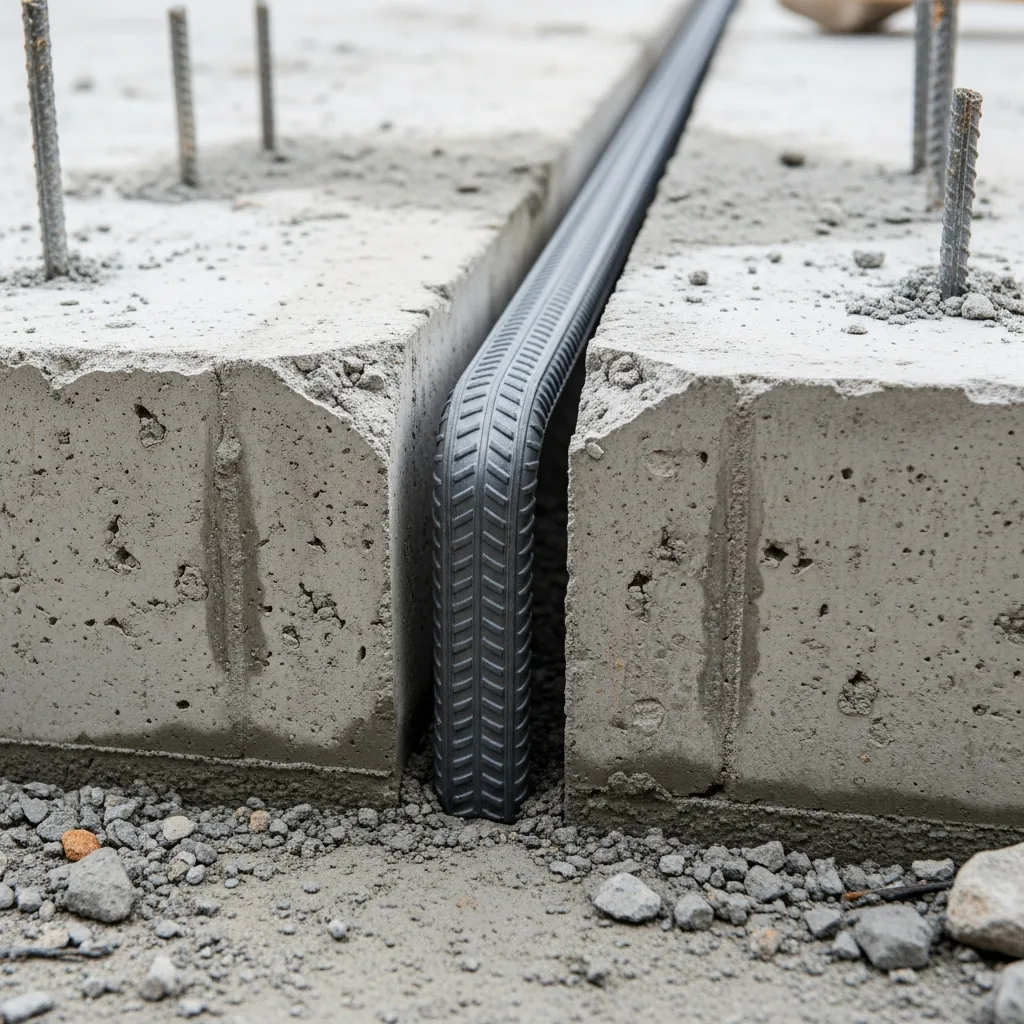
    Hydrophilic waterbar detail at construction joint for Type B structural waterproofing

    Joint detailing is critical in Type B systems


    C

    Type C (Drained) Protection

    Type C protection is provided by the incorporation of an appropriate internal water management system.

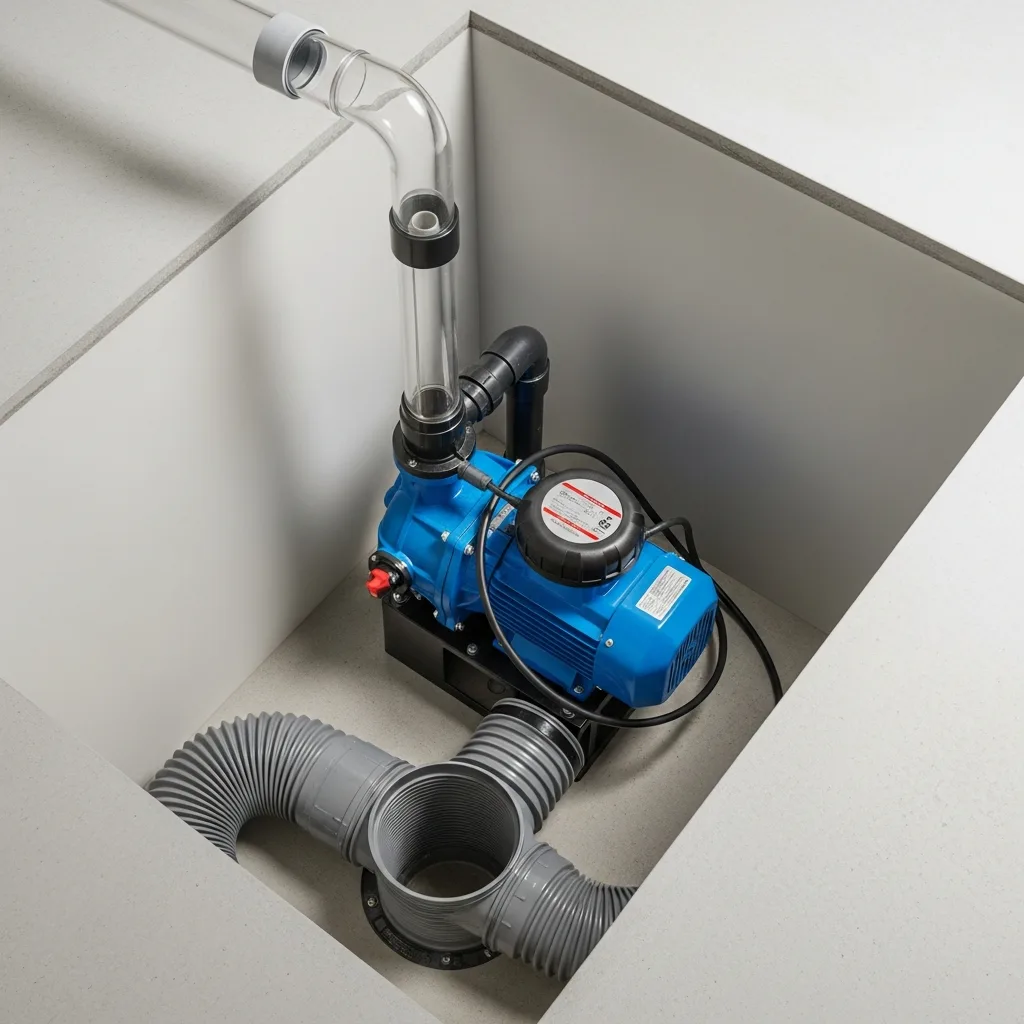
    Type C allows moisture or running water to penetrate through the external wall or floor of the structure and to travel behind the membrane in a controlled drainage system. Type C systems collect and manage any water ingress by diverting it into a designated safe point of disposal, such as a sump pump or package pump station.

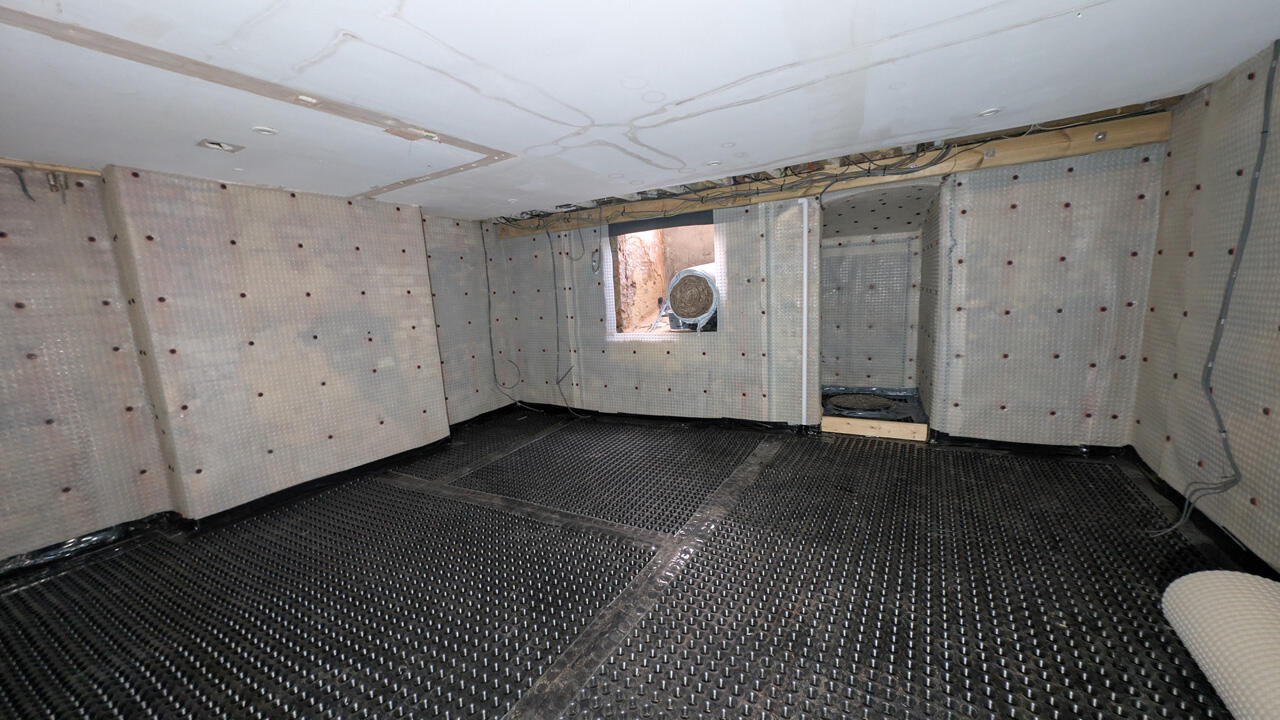
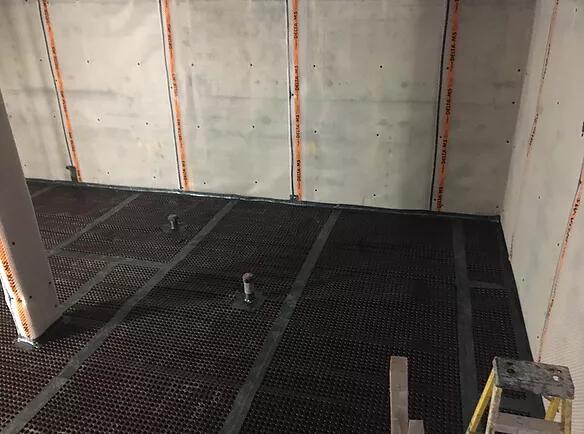
    Cavity drain membranes are studded on the external-facing surface, allowing any water that penetrates the structure to flow into designed drainage channels. The drainage channels carry any water ingress to either a sump and pump chamber, or away from the structure if passive drainage is possible.

    Type C is the most commonly used system for converting existing basements and cellars into habitable spaces. We always install dual pumps with battery backup and high-water alarms to ensure complete protection and redundancy.

    Best Suited For

    Existing basements and cellars being converted to living spaces — bedrooms, home cinemas, gyms, offices. Also the preferred backup system for new builds using Type A or Type B as the primary defence.

    Cavity drain membrane installed on basement walls as part of a Type C drained systemCavity drainage membrane on basement floor with perimeter drainage channels

    Wall and floor cavity drain membranes with perimeter drainage

    Grades of Protection Under BS 8102 in Suffolk, Norfolk & Essex

    In addition to the three Types of waterproofing, BS 8102 defines Grades of dryness. The grade required depends on the intended use of the below-ground space.

    Grade 1

    Basic Utility

    Some seepage and damp patches are tolerable. Not intended for regular occupancy or storage of sensitive items.

    Car parks, plant rooms

    Grade 2

    Better Utility

    No water penetration but some damp vapour is acceptable. Suitable for storage or workshops where controlled humidity is not critical.

    Workshops, storage areas

    Grade 3

    Habitable

    A completely dry environment with controlled ventilation and dehumidification. Essential for any space intended for living, sleeping, or working.

    Bedrooms, offices, cinemas

    Combined & Dual Systems in Suffolk, Norfolk & Essex

    For high-value or high-risk projects, we often recommend combining two types of waterproofing protection. This provides redundancy — if one system is compromised, the other continues to protect the structure.

    For new-build basements, warranty providers such as NHBC (Chapter 5.4) often require a combined waterproofing system where the risk of water ingress is high. We design all systems to meet this requirement where applicable.

    Type A + Type C

    The most common combination for residential conversions. A cementitious tanking slurry is applied to the walls (Type A barrier), then a cavity drain membrane is installed over the top (Type C drained). Water is managed by both the barrier and the drainage system.

    Type B + Type C

    For new-build concrete basements, the structure is designed as waterproof concrete (Type B structurally integral), with a Type C cavity drain membrane installed internally as a managed backup. This is the standard approach for NHBC-warranted new builds.

    Common Causes of Water Ingress in Suffolk, Norfolk & Essex

    Understanding why water enters below-ground structures is the first step towards specifying the right waterproofing solution.

    Hydrostatic Pressure

    Groundwater surrounding the structure pushes against walls and floor slabs. The deeper the structure, the greater the pressure forcing water through cracks and porous masonry.

    Rising Water Table

    Seasonal changes in rainfall can raise the water table, submerging walls that are normally dry. This is particularly common in East Anglia's clay and chalk geology.

    Poor Joints & Cracks

    Settlement, thermal movement, shrinkage cracks, and discontinuities such as service penetrations create direct pathways for water to enter the structure.

    Failed Previous Systems

    Older tanking systems degrade over time. Bitumen coatings crack, cementitious renders debond, and sump pumps fail — all leading to renewed water ingress.

    Frequently Asked Questions in Suffolk, Norfolk & Essex

    Waterproofing prevents liquid water from penetrating a structure, typically under pressure (below ground). Damp proofing prevents moisture and humidity from being absorbed through walls and floors above ground. They are different disciplines requiring different materials and approaches.

    Tanking (Type A) creates a waterproof barrier bonded directly to the structure to block water entry. A cavity drain system (Type C) accepts that water may penetrate the structure and manages it safely by channelling it behind a membrane to a sump pump for removal. For habitable spaces, Type C is generally considered more reliable as it does not rely on a perfect bond to the substrate.

    It depends on whether your basement is an existing structure or a new build, the level of water risk, and the intended use of the space. We inspect every property individually and recommend the most appropriate system. For most residential basement conversions, we recommend Type C or a combined Type A + Type C approach.

    Waterproofing itself does not usually require planning permission. However, if you are converting a cellar into a habitable room, you will need building regulations approval. The waterproofing design must comply with BS 8102:2022, which building control will check as part of the approval process.

    We always install dual pumps with battery backup and high-water alarms. If the primary pump fails, the secondary pump activates automatically. The alarm system alerts you to any issue so it can be resolved before water levels become a problem. We also offer annual maintenance contracts.

    Cavity drain membranes (Type C) have a design life of 30+ years. Sump pumps typically last 10-15 years before replacement. Cementitious tanking (Type A) can last decades if properly applied. We provide long-term installation guarantees and offer ongoing maintenance to ensure continued performance.

    Why Partner With KDS in Suffolk, Norfolk & Essex?

    Design Liability

    We take full liability for the waterproofing design from specification through to installation.

    In-House Installers

    All installations are completed by our own experienced operatives — never subcontracted to a third party.

    Bespoke Designs

    Every project receives an individual design specification using systems and products best suited to the site conditions.

    Long-Term Guarantees

    Insurance-backed guarantees available, providing design PI cover and a long-term installation guarantee.

    Discuss Your Project in Suffolk, Norfolk & Essex

    Whether you are an architect, developer, builder, or homeowner, we can help with the waterproofing design and installation for your below-ground project.

    • Full Design & Installation Service
    • Professional Indemnity Insurance
    • BS 8102:2022 Compliant Systems

    Get A Quote

    Structural Waterproofing

    Investigating a Recurring Basement Leak

    What should be checked when a basement leak returns after repair?

    First establish where water is appearing and whether the location or timing has changed. Check nearby service penetrations, wall-to-floor junctions, visible cracks, and any drainage or pump equipment that forms part of the system. A recurring patch does not by itself identify a failed component, and adding another coating may not address the cause. Review the original system design and have the affected area inspected.

    Read about basement waterproofing →
    Service Area

    Serving Suffolk, Norfolk and Essex

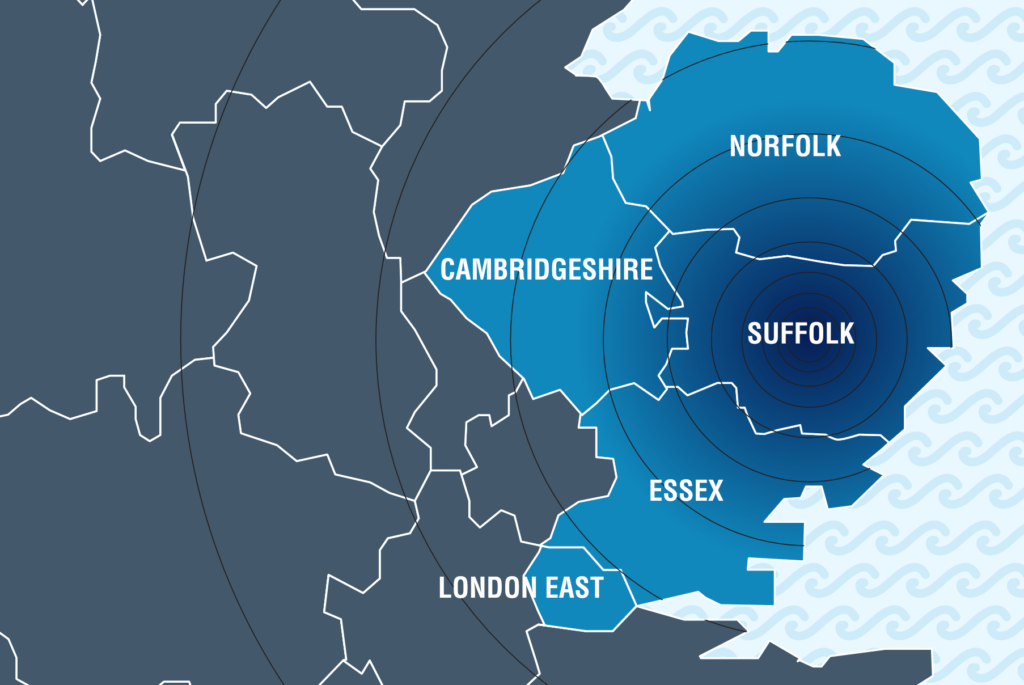
    KDS Property Preservation provides professional damp proofing, waterproofing, timber treatment and property preservation services across East Anglia. We cover Suffolk, Norfolk, Essex, Cambridgeshire and parts of London East.

    SuffolkNorfolkEssexCambridgeshireLondon East
    KDS Property Preservation service area map covering Suffolk, Norfolk, Essex, Cambridgeshire and London East