Penetrating Damp Treatment in Cambridge
Diagnosing and stopping water entering through walls, roofs, and defective external elements.
Penetrating Damp Treatment in Cambridge
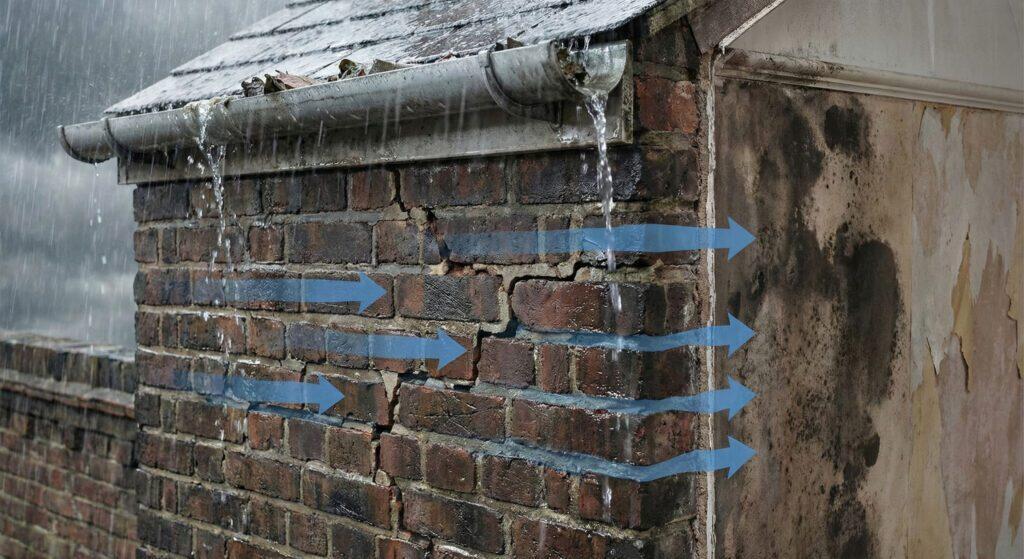
Penetrating damp occurs when water enters a building horizontally — through external walls, roofing, around window frames, or at junctions between different building materials — rather than rising from the ground. It is the most varied form of damp, with causes ranging from defective pointing, cracked render, and failed window seals to leaking gutters, blocked downpipes, and failed chimney flashings. Because the entry point for water is often some distance from where the damp symptom appears internally, correctly identifying the source is essential.
Penetrating damp is also the most commonly misdiagnosed type of damp. Damp patches that appear to be at a fixed level on a wall are sometimes attributed to rising damp when the true cause is a blocked or overflowing gutter above the patch. Similarly, patches around chimney breasts are sometimes attributed to condensation when they are actually caused by water entering through defective flaunching or lead flashings. Getting the diagnosis right is what we focus on first in every inspection.
Signs to Look For in Your Cambridge Property
- →Damp patches that are worst after heavy rain and improve during dry weather
- →Damp concentrated around windows, chimneys, or other specific points rather than uniformly across the wall
- →Tide marks appearing at various heights rather than consistently at low level
- →Green algae growth on external walls indicating persistent moisture
- →Staining on ceilings beneath flat roofs, parapet walls, or roof junctions
- →Blistering paint or bubbling wallpaper on internal walls corresponding to an external defect
Why Cambridge Properties Are Particularly Affected
Cambridge's older solid-brick properties, particularly in the historic centre and the Newnham area, suffer from penetrating damp when pointing and render deteriorate. University and college buildings present particular challenges given their listed status — all treatment methods must be approved by the relevant conservation officers.
Cambridge sits on chalk and river gravels alongside the River Cam, with clay soils in the lower-lying areas around the southern edge of the city. The water table in central Cambridge and along the Cam corridor is relatively high, and the low-lying meadow areas around Midsummer Common and the Backs are notably damp. Properties near the river and in the Mill Road and Romsey areas are most susceptible.
How We Treat Penetrating Damp Treatment in Cambridge
Carry out a systematic visual inspection of all external surfaces, including roof, gutters, pointing, render, window seals, and chimney
Identify every potential water entry point and assess which is most likely responsible for the internal symptoms
Carry out remedial works at the source: repoint, repair render, replace faulty guttering, renew flashings or chimney flaunching, re-seal window frames
Apply a breathable, hydrophobic masonry cream or silicone render to the affected elevation where widespread porosity is the cause
Re-inspect internally after a wet weather period to confirm water ingress has been resolved before replastering
Areas Covered in Cambridgeshire
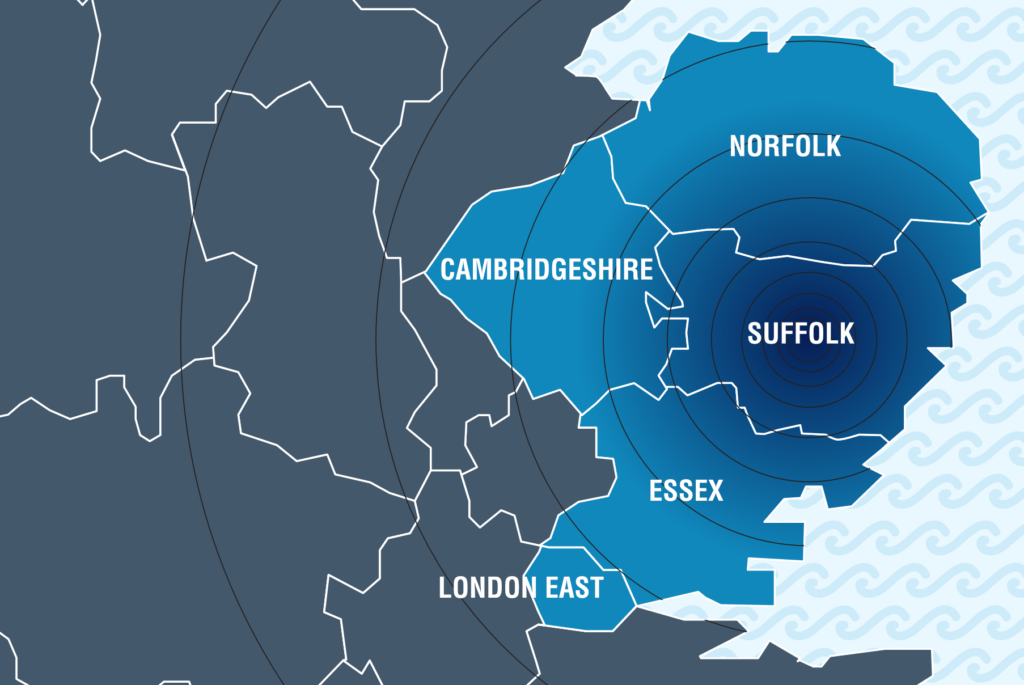
We provide penetrating damp treatment throughout Cambridge (CB1, CB2, CB3, CB4, CB5) and the surrounding areas including Trumpington, Cherry Hinton, Newnham, Chesterton, Histon, Impington, Girton, Barton, Grantchester.
Our local inspection team can usually attend within 48 hours. Call 01473 561 031 or use the form to book.
Common Questions About Penetrating Damp Treatment in Cambridge
Our Cambridge Guarantee
All our penetrating damp treatment work in Cambridge comes with a long-term written guarantee. Our guarantees are accepted by the majority of UK mortgage lenders and are transferable to new owners on sale of the property.
Related Services in Cambridge
Free Cambridge Inspection
Request an Inspection
Leave us your details and we'll be in touch