Wet Rot Treatment in Chelmsford
Identifying and treating timber decay caused by persistent moisture contact — restoring structural integrity.
Wet Rot Treatment in Chelmsford
Wet rot is the term used for a group of fungi — most commonly Coniophora puteana (cellar fungus) and Fibroporia vaillantii — that attack and decay timber in persistently damp conditions. Unlike dry rot, wet rot fungi cannot transport moisture through their strand systems; they are entirely dependent on direct contact with a consistent moisture source. This means that wet rot is confined to areas of damp timber and does not spread through masonry or to other parts of the building in the way that dry rot can. However, wet rot can cause equally severe structural damage in the areas it does affect.
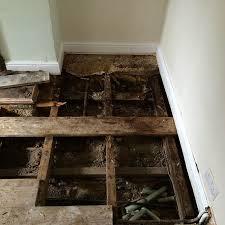
The most common locations for wet rot in East Anglian properties are ground floor joists in poorly ventilated sub-floor voids, window frames and sills in contact with damp masonry, and any timber in contact with the ground or damp surfaces. Treatment involves eliminating the moisture source, removing and replacing decayed timber, and protecting sound adjacent timber with a fungicidal preservative to prevent further decay.
Signs to Look For in Your Chelmsford Property
- →Timber that is dark brown, darker than surrounding wood, and soft when probed
- →Longitudinal cracking along the grain (as opposed to the cuboidal cracking of dry rot)
- →White or pale mycelium strands in areas of very severe wet rot — less substantial than dry rot mycelium
- →Floor that feels soft, springy, or spongy when walked upon
- →Window frames or sills that feel soft at the bottom or around joints
- →Paint that blisters or fails repeatedly on timber surfaces — indicating persistent moisture beneath
Why Chelmsford Properties Are Particularly Affected
Wet rot in Chelmsford ground floors is strongly correlated with blocked sub-floor air bricks — a very common finding in the older terraces and semis where raised path levels or paint have closed off the ventilation to the sub-floor void.
Chelmsford sits on London Clay throughout most of the city, with the River Can and River Chelmer creating lower-lying areas that are susceptible to high water table conditions. The clay soil is highly moisture-retentive and can cause seasonal shrinkage and swelling, which exacerbates cracking in older masonry.
How We Treat Wet Rot Treatment in Chelmsford
Identify and address the moisture source — typically a blocked sub-floor air brick, a leaking pipe, or defective external drainage
Probe all timber in the affected area to determine the full extent of decay
Remove all timber that has lost more than approximately 20% of its structural cross-section
Treat all sound adjacent timber with a fungicidal preservative to prevent further fungal attack
Replace decayed structural timber with pre-treated new timber, ensuring it is not in direct contact with damp masonry
Areas Covered in Essex
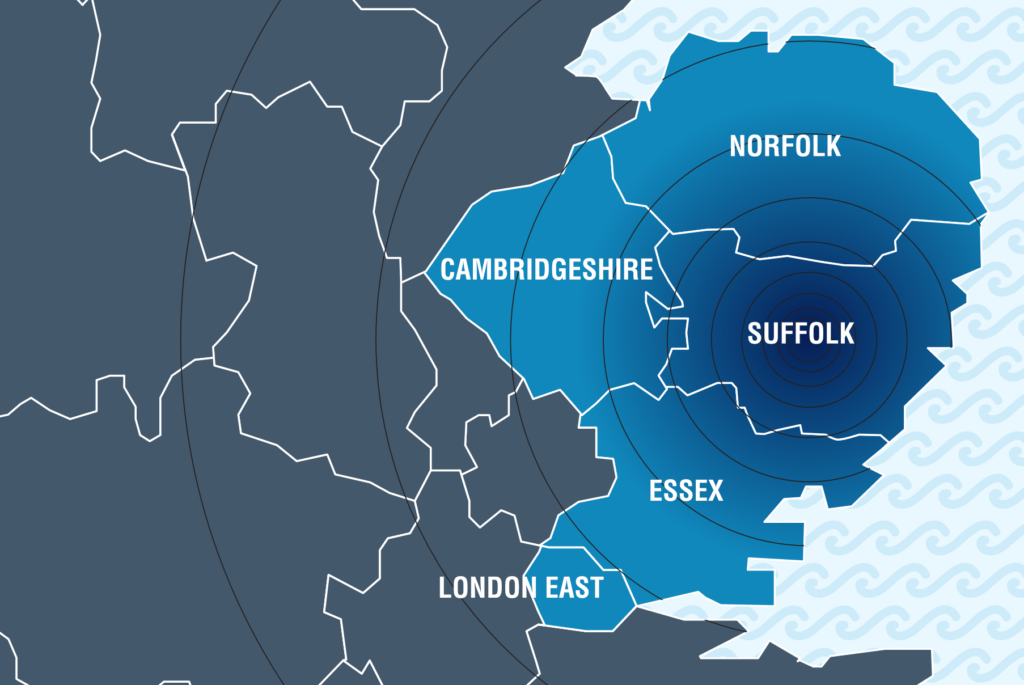
We provide wet rot treatment throughout Chelmsford (CM1, CM2, CM3, CM9) and the surrounding areas including Moulsham, Springfield, Broomfield, Great Baddow, Galleywood, Writtle, Danbury, South Woodham Ferrers.
Our local inspection team can usually attend within 48 hours. Call 01473 561 031 or use the form to book.
Common Questions About Wet Rot Treatment in Chelmsford
Our Chelmsford Guarantee
All our wet rot treatment work in Chelmsford comes with a long-term written guarantee. Our guarantees are accepted by the majority of UK mortgage lenders and are transferable to new owners on sale of the property.
Related Services in Chelmsford
Free Chelmsford Inspection
Request an Inspection
Leave us your details and we'll be in touch