If you have ever driven past a house and noticed how fresh, clean, and well-maintained it looks — despite clearly being an older property — there is a good chance it has had an external wall coating applied. Wall coatings have become one of the most popular exterior home improvements in the UK over the past decade, and for good reason. They protect your walls from the weather, dramatically improve the appearance of your property, and can save you from ever having to repaint your exterior walls again.
Across Ipswich and Suffolk, external wall coatings are in particularly high demand on solid-wall and pebbledash properties. The region's exposure to driving rain from the North Sea makes weather-tight external walls a genuine priority, and many older Suffolk homes have failed or deteriorating render that lets water in at the wall face. A professionally applied coating eliminates penetrating damp at source and gives the property a fresh, renewed appearance that lasts for years.
What Is an External Wall Coating?
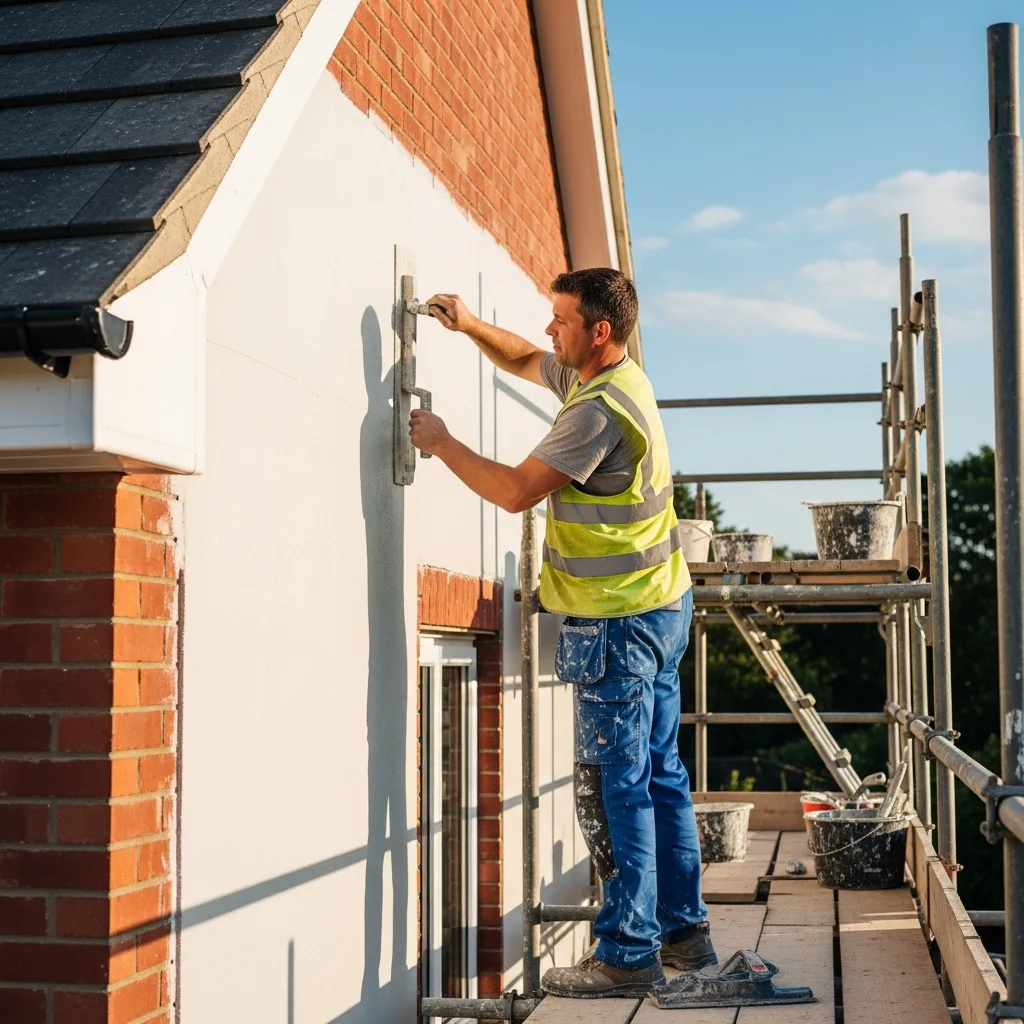
An external wall coating is a thick, flexible, weather-resistant finish that is applied directly to the outside walls of your property. Unlike conventional masonry paint — which sits on the surface and typically lasts 3 to 5 years before flaking and fading — a wall coating bonds into the substrate and creates a durable, breathable, waterproof barrier that can last 20 years or more.
Modern wall coatings are typically resin-based or silicone-enhanced formulations applied by spray or roller in multiple coats. They are available in a wide range of colours and finishes, from smooth to textured, and can be applied to virtually any masonry surface including brick, render, pebbledash, concrete block, and stone.
The key difference between a wall coating and ordinary paint is thickness and composition. A quality wall coating is applied at 10 to 15 times the thickness of masonry paint, giving it far superior waterproofing, durability, and crack-bridging properties. It flexes with the natural movement of the building rather than cracking and peeling like conventional paint.
Why Do Properties Need Wall Coatings?
The exterior walls of any building take a relentless beating from the British weather. Rain, wind, frost, UV exposure, and temperature fluctuations all take their toll over time. Without adequate protection, masonry absorbs water, which leads to a cascade of problems:
Penetrating damp
Water soaks through porous brickwork or cracked render and appears as damp patches on internal walls. Over time, this damages plaster, decorations, and can encourage mould growth.
Frost damage and spalling
Water absorbed into brickwork freezes and expands during cold weather, causing the face of the brick to crack and flake away (spalling). Once started, this damage is progressive and expensive to repair.
Algae, moss, and biological growth
Damp, north-facing walls are particularly prone to green algae, black mould, and moss growth, which makes the property look neglected and further traps moisture against the surface.
Cracked and deteriorating render
Cement render expands and contracts with temperature changes. Over decades, hairline cracks develop, allowing water to penetrate behind the render and accelerate further cracking.
Heat loss
Wet walls conduct heat far more efficiently than dry walls. A property with saturated external walls loses significantly more heat, increasing energy bills and making rooms feel cold.
An external wall coating addresses all of these issues in a single application. It seals the wall surface against water ingress, prevents frost damage, inhibits biological growth, bridges hairline cracks, and keeps the masonry dry — which in turn reduces heat loss.
Benefits of External Wall Coatings
Waterproof Protection
Creates a continuous waterproof barrier that prevents rain from penetrating the masonry, eliminating the root cause of penetrating damp.
20+ Year Lifespan
A professionally applied wall coating typically lasts 20 years or more — compared to 3 to 5 years for standard masonry paint. Many come with a manufacturer's guarantee.
Improved Energy Efficiency
Dry walls retain heat far more effectively than damp walls. By keeping your masonry dry, wall coatings reduce heat loss and can lower your energy bills.
Never Paint Again
Once a wall coating is applied, you should not need to repaint your exterior walls for decades. This saves thousands of pounds in ongoing maintenance costs over the life of the property.
Transformed Appearance
A wall coating completely transforms the look of a property, covering stained brickwork, patchy render, pebbledash, and weathered surfaces with a clean, uniform finish.
Breathable
Quality wall coatings are breathable, allowing moisture vapour from inside the building to escape through the wall structure. This prevents moisture becoming trapped within the masonry.
How Are External Wall Coatings Applied?
The application process is more involved than simply painting a wall. A professional installation typically follows these stages:
Inspection and preparation
The walls are thoroughly inspected for cracks, loose render, damaged pointing, and any underlying damp issues. These must be repaired before the coating is applied. Any existing flaking paint or loose material is removed.
Cleaning and biocide treatment
The walls are pressure washed to remove dirt, algae, moss, and biological growth. A biocide treatment is applied to kill any remaining spores and prevent regrowth beneath the coating.
Masking and protection
Windows, doors, fascias, soffits, guttering, and any other non-masonry surfaces are carefully masked and protected to ensure a clean, precise finish.
Primer application
A specialist stabilising primer is applied to the prepared wall surface. This seals the substrate, improves adhesion, and ensures uniform absorption of the topcoat.
Wall coating application
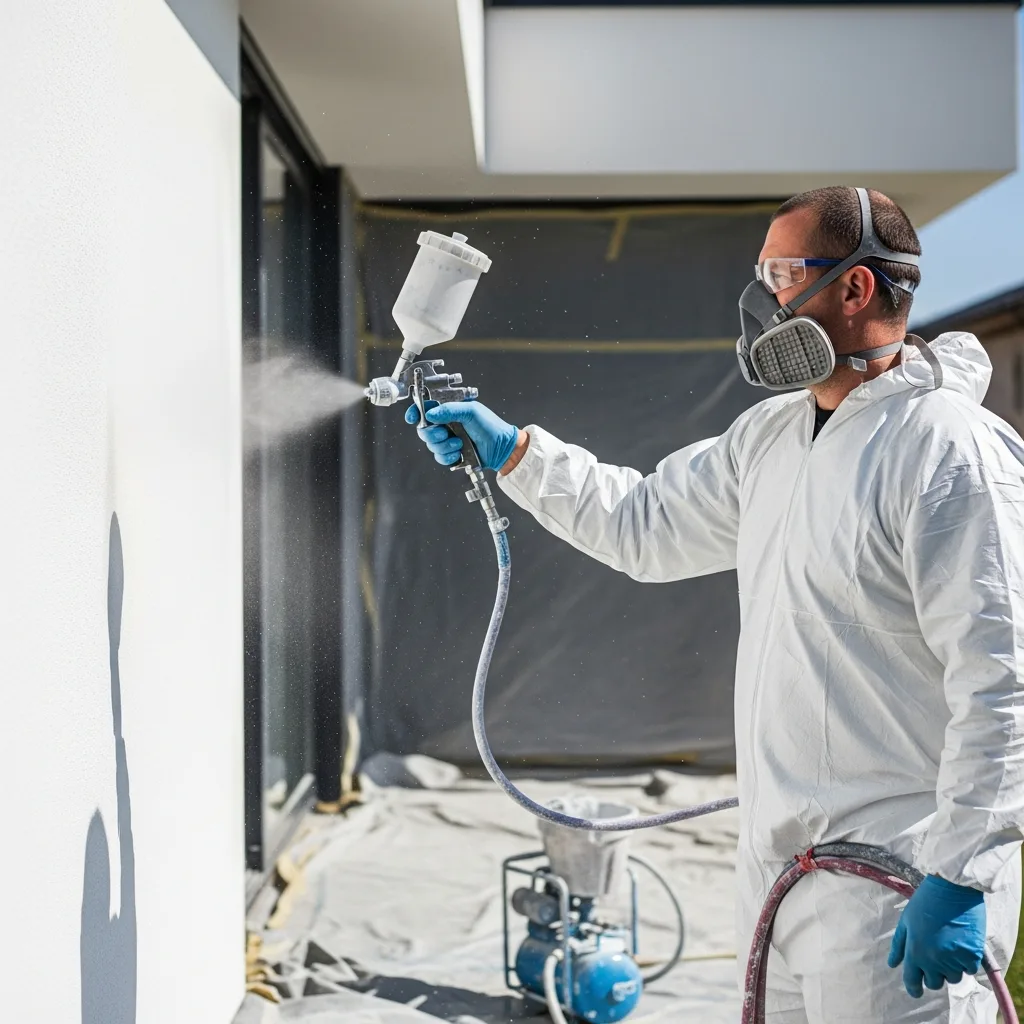
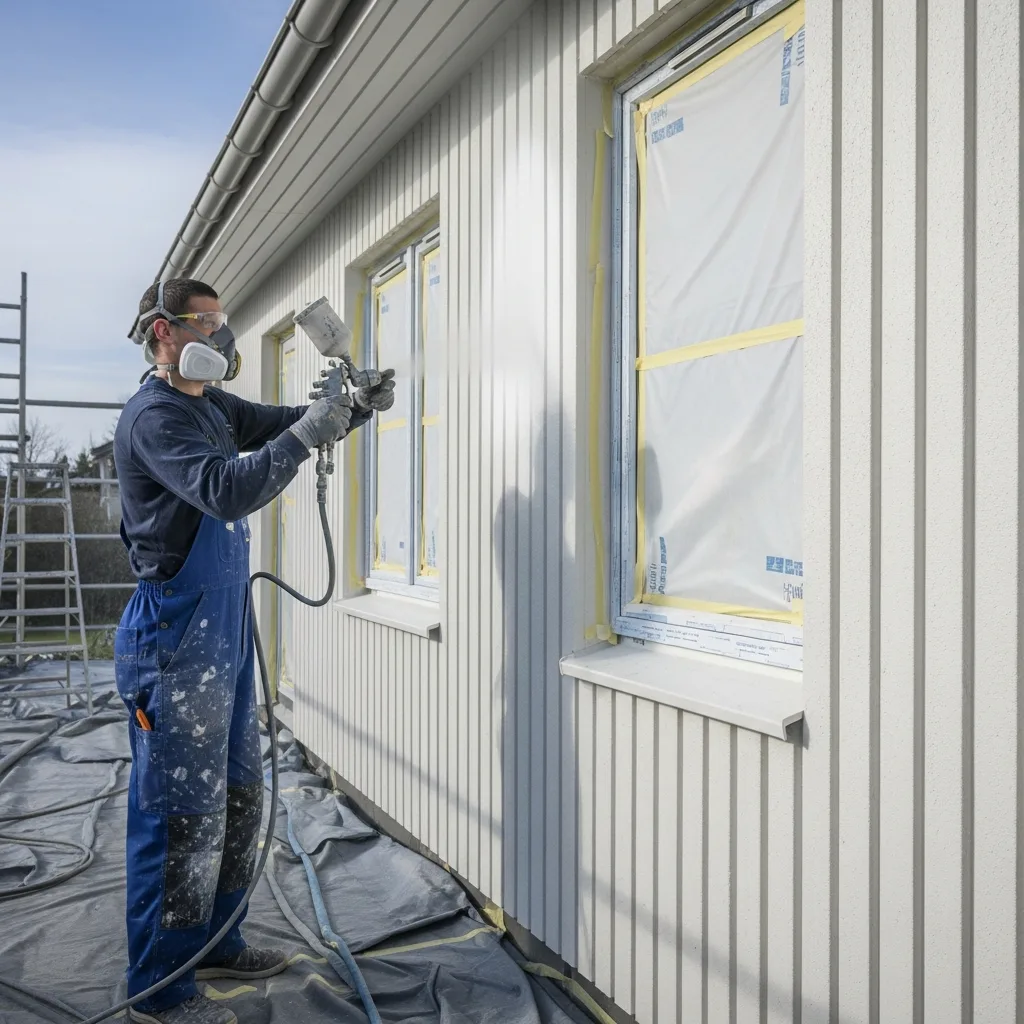
The coating is applied in multiple passes using professional spray equipment, ensuring even coverage and consistent thickness across the entire wall surface. Corners, edges, and details are finished by brush or roller.
Final inspection and clean-up
The finished coating is inspected for coverage and uniformity. All masking is removed, surrounding areas are cleaned, and the property is left tidy.
The entire process typically takes 3 to 5 days for a standard semi-detached or detached house, depending on the size of the property and the extent of preparation required. Scaffolding is usually needed for two-storey properties.
Wall Coating vs Masonry Paint: What Is the Difference?
This is one of the most common questions we are asked, and the answer makes a significant difference to the long-term value of your investment.
| Feature | External Wall Coating | Masonry Paint |
|---|---|---|
| Thickness | 10–15x thicker than paint | Thin film |
| Lifespan | 20+ years | 3–5 years |
| Waterproofing | Excellent — fully waterproof | Limited — water can penetrate |
| Crack bridging | Yes — flexes with building movement | No — cracks with the substrate |
| Breathability | Yes — allows moisture vapour out | Varies — some trap moisture |
| Application | Professional spray equipment | Brush or roller (DIY possible) |
| Maintenance | Virtually none for 20+ years | Repaint every 3–5 years |
| Cost (upfront) | Higher initial investment | Lower initial cost |
| Cost (lifetime) | Significantly lower over 20 years | Higher — repeated repainting |
| Appearance | Uniform, textured professional finish | Flat paint finish |
To put it simply: masonry paint is a cosmetic treatment that needs regular reapplication. An external wall coating is a long-term protective system that waterproofs, insulates, and transforms the appearance of your property in a single application.
What Surfaces Can Be Coated?
External wall coatings can be applied to virtually any masonry surface, including:
Pebbledash properties in particular benefit enormously from wall coatings. The rough, uneven surface of pebbledash traps moisture, dirt, and algae, and is extremely difficult to keep clean or paint effectively. A wall coating fills and seals the pebbledash texture, creating a smooth, clean, waterproof surface that looks dramatically better.
How Long Do Wall Coatings Last?
A professionally applied external wall coating should last a minimum of 20 years, and many last significantly longer. The longevity depends on several factors: the quality of the product used, the thoroughness of the surface preparation, the skill of the applicator, and the exposure of the property (south and west-facing walls take more weathering than sheltered elevations).
Over time, the colour may soften slightly due to UV exposure, but the waterproofing performance and structural integrity of the coating remain intact. If you wish to change the colour after 15 or 20 years, a fresh topcoat can be applied over the existing coating without the need for full removal and reapplication.
How Much Do External Wall Coatings Cost?
The cost of an external wall coating varies depending on the size of the property, the condition of the existing walls, the amount of preparation required, and the product specified. As a very rough guide:
Typical Price Ranges
- Terraced house: £2,500 – £4,500
- Semi-detached house: £3,500 – £6,000
- Detached house: £5,000 – £10,000+
- Bungalow: £2,000 – £4,000 (no scaffolding required)
These are indicative prices only. Every property is different, and the only way to get an accurate price is to arrange a free inspection and quotation.
While the upfront cost is higher than painting, the lifetime cost is significantly lower. If you repaint your exterior walls every 4 years at £800–£1,500 per time, you will spend £4,000–£7,500 over 20 years — and the walls will still not be waterproof. A wall coating costs a similar amount but lasts the entire 20 years with no ongoing maintenance.
Things to Consider Before Getting a Wall Coating
Wall coatings are an excellent solution for the vast majority of properties, but there are a few things to be aware of:
Underlying damp must be treated first
A wall coating will not fix rising damp, structural defects, or internal condensation. If there are underlying damp issues, these must be resolved before the coating is applied. A wall coating seals the external surface — if moisture is coming from elsewhere, it needs a different treatment.
Listed buildings may have restrictions
If your property is listed, you may need listed building consent before applying an external wall coating. The coating changes the external appearance of the building, which is controlled under listing regulations. Always check with your local planning authority first.
Quality of preparation matters
The longevity of a wall coating is directly linked to the quality of the preparation. Walls must be properly cleaned, repaired, and primed before the coating is applied. Cutting corners on preparation is the single biggest cause of premature coating failure.
Not all coatings are the same
There is a wide variation in product quality across the industry. Cheap, low-quality coatings can crack, peel, and fail within a few years. Always ask what product is being used, and look for products with proven track records and manufacturer-backed guarantees.
Colour Coatings vs Clear Coatings
External wall coatings come in two main types: colour coatings and clear coatings. Each serves a different purpose.
Colour Coatings
Colour coatings completely transform the look of your property. They cover stained brickwork, patchy render, mismatched repairs, and pebbledash with a clean, uniform, coloured finish. Available in hundreds of colours, they are the most popular choice for properties where a fresh, modern appearance is the priority.
View our colour coating service →Clear Coatings
Clear coatings provide waterproof protection without changing the appearance of the wall. They are ideal for properties with attractive brickwork or stonework that you want to preserve. The coating is invisible once dry but provides the same waterproofing performance as a colour coating.
View our clear coating service →Is a Wall Coating Right for Your Property?
An external wall coating is worth considering if any of the following apply to your property:
- You are tired of repainting your exterior walls every few years
- You have penetrating damp caused by porous or cracked brickwork
- Your render is cracked, patchy, or stained but structurally sound
- You have pebbledash that looks tired and traps dirt and algae
- You want to improve the kerb appeal and value of your home
- Your external walls feel cold or damp to the touch
- You want a long-term, low-maintenance solution
If you are unsure whether a wall coating is the right option, the best next step is to arrange a free inspection. We will assess the condition of your walls, discuss the available options, and provide a no-obligation quotation tailored to your property.
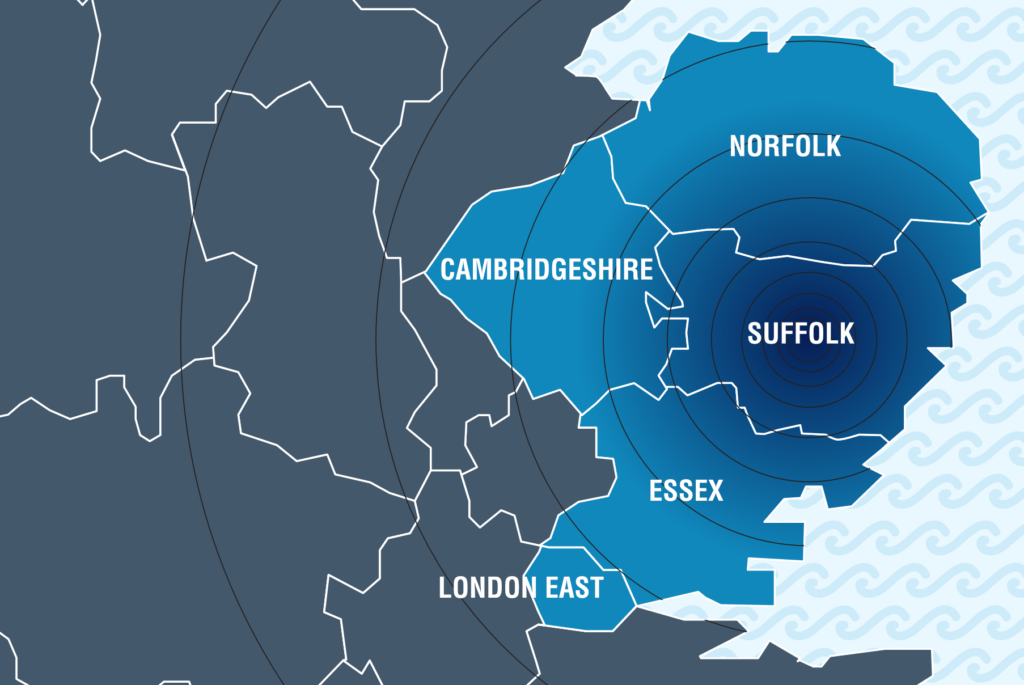
KDS Property Preservation applies external wall coatings across Suffolk, Norfolk, and Essex. We also offer exterior rendering, silicone rendering, external wall insulation, and roof coatings.
Interested in an External Wall Coating?
Book a free inspection with KDS Property Preservation. We cover Ipswich, Norwich, Colchester, Bury St Edmunds, and all surrounding areas across Suffolk, Norfolk, and Essex.