If your home is cold in winter, expensive to heat, or suffering from condensation on external walls, thermal plasterboard could be one of the most practical and cost-effective improvements you can make. Available in thicknesses from just 22mm to 75mm or more, thermal board can be fixed directly to existing walls without the need for a full internal wall insulation system — making it a relatively fast, low-disruption way to add meaningful insulation to almost any room.
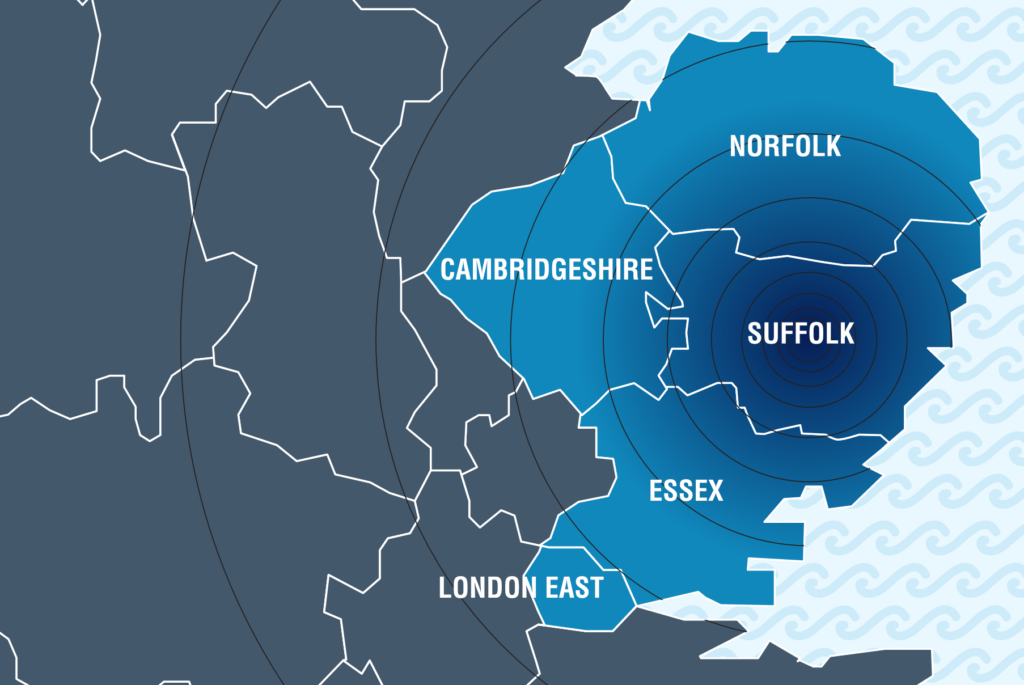
It is a solution we install regularly across Ipswich, Bury St Edmunds, and across Suffolk. Many homes in the county are solid-wall constructions — Victorian terraces, Edwardian semis, older rural cottages — that cannot be cavity filled and have never had any wall insulation fitted. Thermal plasterboard is often the most practical way to address cold, poorly insulated rooms in these properties without undertaking major external works.
What Is Thermal Plasterboard?
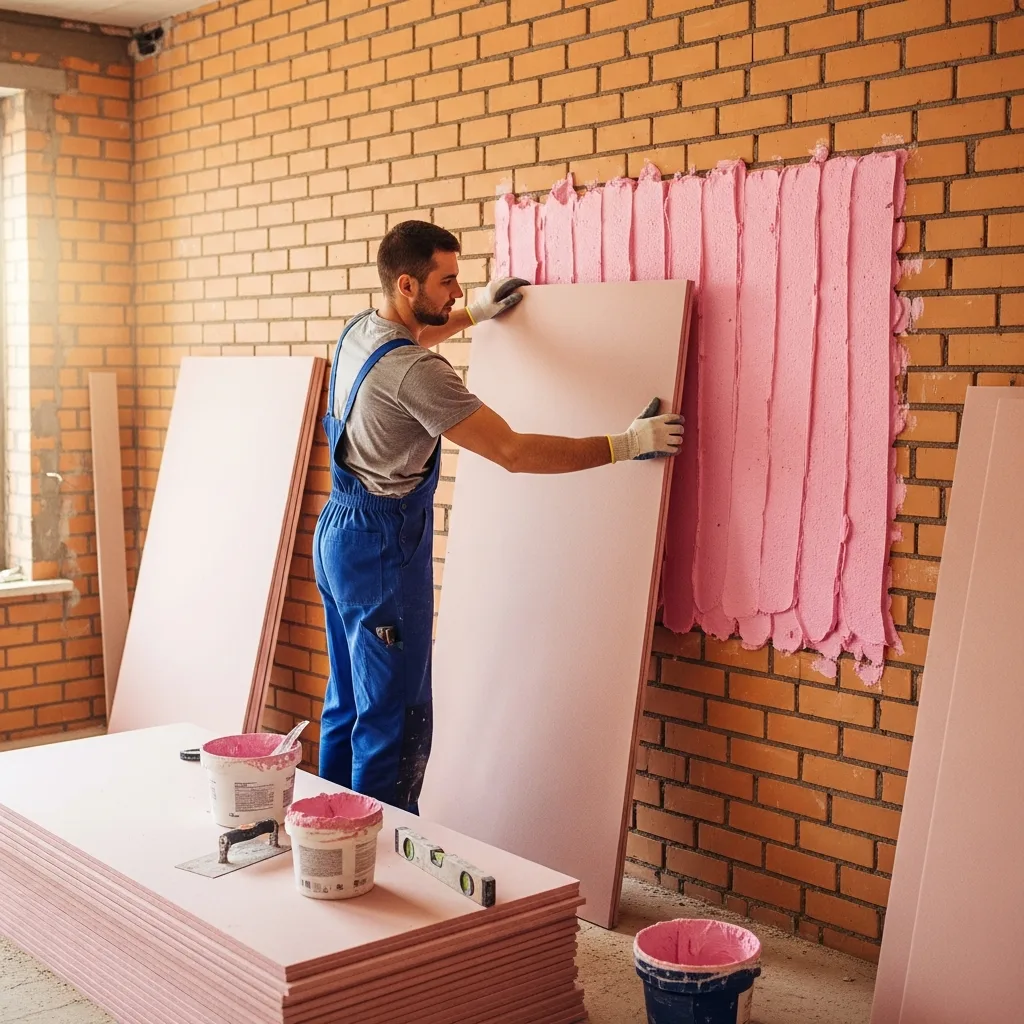
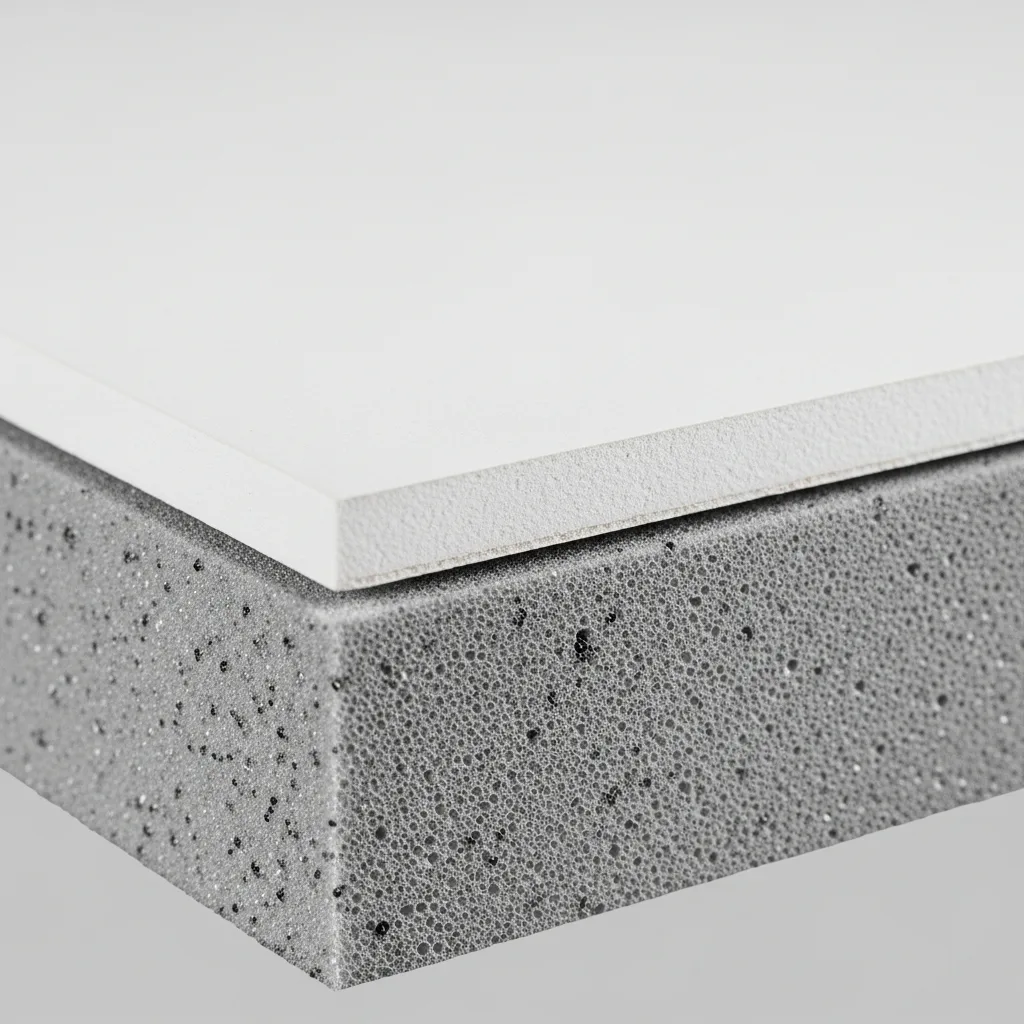
Thermal plasterboard — also known as thermal board, insulated plasterboard, or PIR-backed plasterboard — is a composite panel consisting of a standard gypsum plasterboard face bonded to a layer of rigid insulation on the back. The insulation layer is typically made from polyisocyanurate (PIR) foam, expanded polystyrene (EPS), or mineral wool, depending on the product and manufacturer.
The result is a single product that insulates and finishes the wall in one operation, rather than requiring separate layers of insulation and plasterboard to be installed independently. This makes it significantly faster and less disruptive to install than a full internal wall insulation (IWI) system using a studwork frame and separate insulation batts.
Thermal board can be fixed directly to existing masonry walls using a combination of adhesive and mechanical fixings — a technique known as "dot and dab" — or to existing plasterboard using appropriate fixings. The finished surface is ready to skim-plaster or decorate directly, just like standard plasterboard.
What Are the Benefits of Thermal Plasterboard?
Thermal board offers a range of benefits that make it attractive for homeowners looking to improve their property's energy performance without undertaking major building works.
Improved Thermal Performance
Thermal board dramatically reduces the U-value of an external wall, meaning less heat escapes through the wall to the outside. In solid-wall properties, which have no insulation layer at all, this can reduce wall heat loss by 50% or more depending on the thickness of board used.
Lower Energy Bills
By retaining more heat within the room, thermal board reduces the demand on your heating system. Homeowners with solid-wall properties often report noticeable reductions in their energy bills after installation, with payback periods of 5 to 10 years for a typical room.
Reduced Condensation & Mould
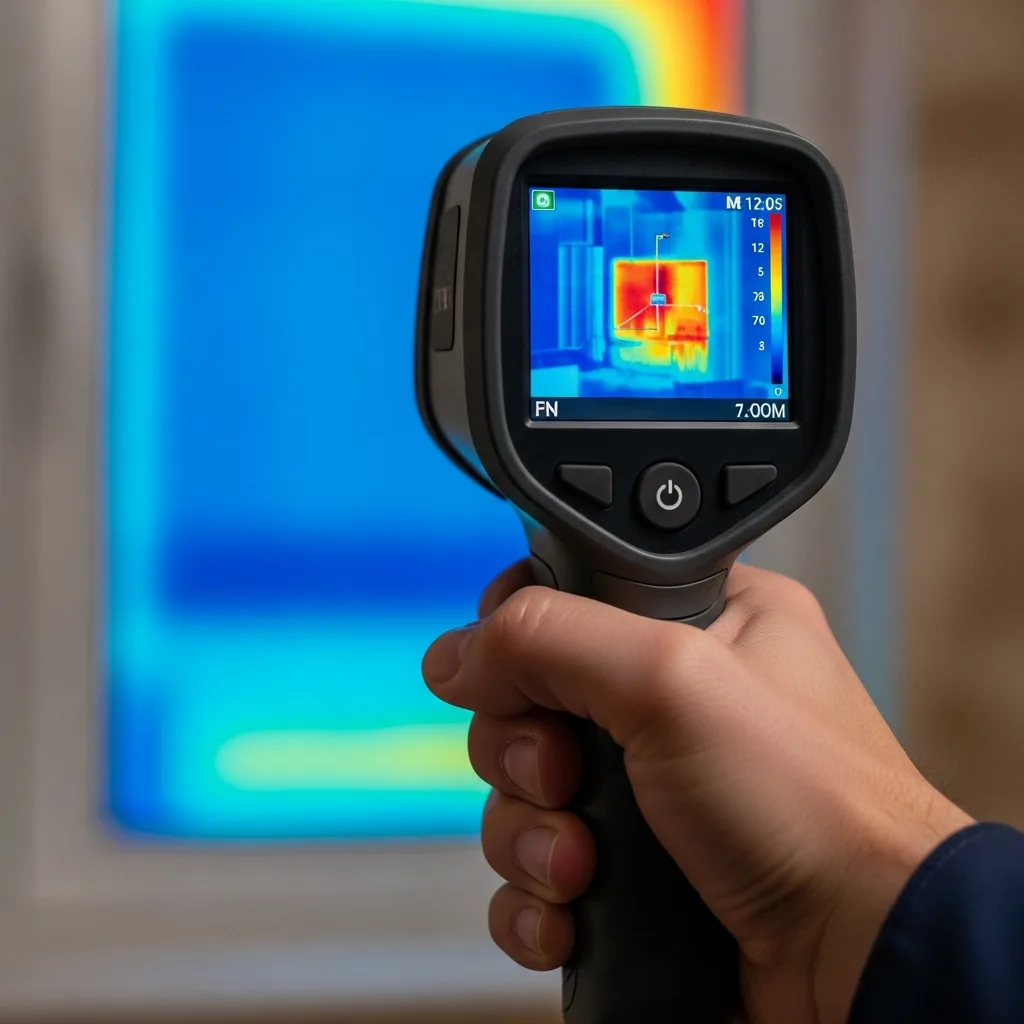
Cold surfaces attract condensation, which leads to black mould growth on external walls. By warming the wall surface, thermal board raises it above the dew point of the indoor air — eliminating the cold surface that condensation forms on and dramatically reducing mould risk.
Improved Comfort
Cold, clammy external walls make rooms feel uncomfortable even when the air temperature is adequate. Insulating the wall surface creates a warmer, more comfortable room environment — particularly in older solid-wall properties where wall temperatures can be extremely low.
Low Disruption
Unlike external wall insulation (EWI), thermal board is installed entirely from inside the property. There is no scaffolding, no external works, and the job can usually be completed room by room with minimal disruption to daily life.
Suitable for Most Wall Types
Thermal board can be applied to solid brick, stone, or block walls, as well as timber frame and cavity walls where the cavity has already been filled. It is suitable for both residential and light commercial properties.
Types of Thermal Plasterboard
Not all thermal plasterboard is the same. The type of insulation core used, and its thickness, determines how much insulation you get and how much room depth is lost. Here is a summary of the main types:
PIR-Backed Plasterboard (Polyisocyanurate)
Most PopularPIR is the highest-performing widely available insulation material. Boards with a PIR core achieve a significantly lower U-value per millimetre of thickness than EPS or mineral wool, meaning you can achieve a given level of insulation with a thinner board — and lose less room space. Brands include Kingspan Kooltherm K17, Recticel Eurowall, and Celotex TB4000. PIR-backed boards are the most commonly specified option for walls where room depth is at a premium.
EPS-Backed Plasterboard (Expanded Polystyrene)
EPS is a lower-cost insulation material with decent thermal performance, though not as good as PIR per millimetre. EPS-backed boards are a cost-effective option where wall depth is not a concern and budget is the priority. They are available from most builders' merchants and are straightforward to handle and cut.
Mineral Wool-Backed Plasterboard
Mineral wool offers good acoustic as well as thermal performance, making it a popular choice where noise insulation is also a consideration — for example, on party walls or in properties near busy roads. It is also non-combustible, which gives it an advantage in fire-sensitive applications. Its thermal performance per millimetre is lower than PIR, so thicker boards are needed for the same U-value.
Aerogel-Enhanced Boards
Aerogel is an extraordinarily effective insulation material — the best performing commercially available option by thermal conductivity. Aerogel-enhanced boards such as Spacetherm achieve remarkable U-values in very thin profiles (as little as 15–20mm including the plasterboard face), making them ideal for situations where wall depth is very restricted, such as listed buildings, bay windows, or reveals. They are considerably more expensive than PIR boards but pay for themselves in space saving and thermal performance.
How Thick Should Thermal Board Be?
The answer depends on the existing wall construction, your target U-value, and how much room depth you can afford to lose. Here is a rough guide:
| Board Type & Thickness | Approx. U-value Improvement | Best For |
|---|---|---|
| PIR 22mm total (12.5mm board + 10mm PIR) | Modest improvement — takes edge off cold | Tight spaces, listed buildings, minor upgrades |
| PIR 37mm total (12.5mm board + 25mm PIR) | Good improvement on most walls | Standard retrofit on solid brick walls |
| PIR 52mm total (12.5mm board + 40mm PIR) | Significant improvement — near modern standards | High-performance retrofit, older properties |
| PIR 72mm total (12.5mm board + 60mm PIR) | Excellent — approaches cavity wall performance | Maximum improvement, where room loss is acceptable |
| Aerogel 20–30mm total | Excellent for the thickness — best per mm | Listed buildings, reveals, where space is critical |
As a rule of thumb, every 10mm of PIR insulation saves roughly 12–15% of the heat that would otherwise be lost through that wall. Thicker is always better thermally, but there is a point of diminishing returns — and every extra millimetre means slightly less room space. Most installations use 37mm or 52mm total thickness as a practical balance.
Is Thermal Board the Same as Internal Wall Insulation?
Thermal plasterboard and internal wall insulation (IWI) are related but different products. IWI refers to a complete insulation system, which might include a studwork frame with insulation batts fitted between the studs, or a continuous layer of rigid insulation boards fixed to the wall and then dry-lined. Thermal board is one type of IWI system — the simplest and thinnest — but it is not the only option.
For most rooms where some insulation is better than none, and where losing 37–52mm of room depth is acceptable, thermal plasterboard is an excellent choice. For rooms where maximum thermal performance is required and more depth can be sacrificed, a studwork IWI system with 100mm or more of insulation will deliver better results.
Thermal Board and Damp: What You Need to Know
One of the most important things to understand about thermal plasterboard is what happens if it is installed on a wall that has a damp problem. This is a crucial point that is frequently overlooked.
Important: Treat Damp Before Insulating
Thermal board must never be installed over a wall that has rising damp, penetrating damp, or any other active moisture problem. If it is, the insulation traps the moisture within the wall structure, where it can cause rapid deterioration of the wall, accelerate mould growth behind the board, and cause the adhesive to fail — causing the boards to come away from the wall.
Before any thermal board installation, the wall should be inspected for damp and any issues resolved. At KDS Property Preservation, we always assess the wall's moisture content before recommending thermal board, and we treat any underlying damp issues first.
If the wall is sound and dry, thermal board is an excellent addition. It raises the wall surface temperature above the dew point, which actually helps to keep the wall dry by eliminating the condensation cycle. But it must start from a dry base.
How Is Thermal Board Installed?
Professional installation of thermal plasterboard follows a straightforward process, though attention to detail is important to avoid problems such as cold bridging, air gaps, or inadequate fixings.
Wall assessment
The wall is checked for damp, structural defects, and levelness. Any damp issues are resolved before proceeding. The wall is also checked for buried services such as pipes and cables.
Surface preparation
Loose plaster, flaking paint, and other surface debris are removed. The wall surface is swept clean and any large irregularities are levelled with mortar.
Adhesive application
Dot-and-dab adhesive (often a bonding compound or specialist insulated plasterboard adhesive) is applied to the wall in a pattern of blobs. This is supplemented by mechanical fixings for security and to comply with fire regulations.
Board placement
Boards are offered up to the wall, aligned, and pressed firmly into the adhesive. They are checked for plumb and level, and the dots of adhesive are compressed to fill any gaps between the board and the wall.
Jointing and finishing
Joints between boards are taped and filled with joint compound. The board face is then skim-plastered to a smooth finish ready for decoration. Alternatively, the joints can be filled and the surface painted directly without a full skim coat.
Skirting and architrave refitting
Skirting boards, electrical sockets, and switches are refitted at the new wall face. The slight projection of the new boards needs to be accommodated in these finishes.
How Much Does Thermal Plasterboard Cost?
The cost of thermal board installation depends on the area to be covered, the thickness of board specified, whether skimming is included, and the amount of making-good required (skirting boards, sockets, switches, etc.). As a rough guide for supply and professional installation:
Typical Price Ranges (Installed)
- Single room (standard bedroom): £600 – £1,200
- Living room or larger room: £900 – £1,800
- Whole-house (2–3 external walls per room): £4,000 – £8,000+
- Aerogel boards (per room): Add 30–60% to above
These are indicative prices only. Every property is different — contact us for a free inspection and accurate quotation.
The material cost of the boards themselves is a relatively small proportion of the total — it is the labour for installation, skimming, and making-good of finishes that drives the majority of the cost. For this reason, it can make sense to combine thermal board installation with other works such as replastering or redecoration to reduce the overall disruption and cost.
Is Thermal Board Right for My Home?
Thermal plasterboard is worth considering if any of the following apply:
- You have a solid-wall property (typically pre-1920) with no cavity wall insulation
- Your external walls feel cold to the touch in winter
- You suffer from condensation or black mould on external walls
- Your heating bills feel disproportionately high for the size of your home
- You want to improve insulation without external building works or scaffolding
- You are renovating a room and want to improve its thermal performance at the same time
- You have a listed building or conservation area property where external insulation is not permitted
- You want to reduce room temperature fluctuation and improve overall comfort
At KDS Property Preservation, we supply and install thermal plasterboard across Suffolk, Norfolk, and Essex. We also offer ultra-thin Iso-Therm and Spacetherm aerogel insulation for situations where standard boards are too thick, and external wall insulation (EWI) where external application is preferred.
Interested in Thermal Board for Your Home?
Book a free inspection with KDS Property Preservation. We will assess your walls, check for any underlying damp issues, and recommend the best insulation solution for your property and budget.