Old houses are beautiful — but they come with a well-established relationship with damp. If you own or are buying an older property anywhere in Suffolk, understanding why damp happens, what type you are dealing with, and what makes it worse is the first step to fixing it properly. Getting the diagnosis wrong means spending money on the wrong treatment. This guide explains the causes clearly and sets out what to do about each one.
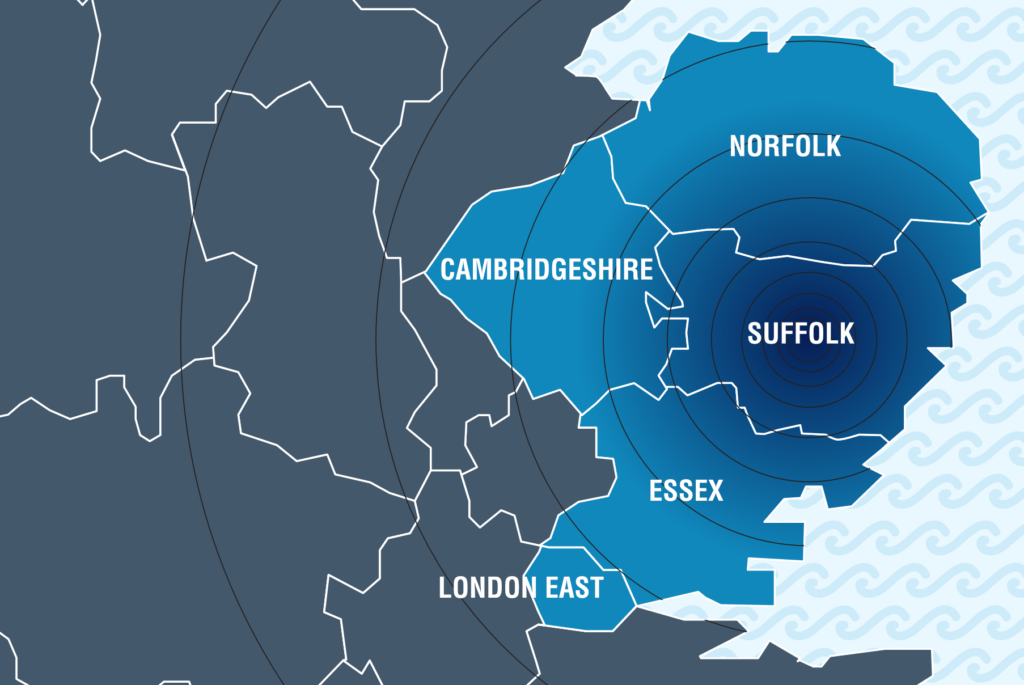
At KDS Property Preservation, we carry out free damp inspections across Ipswich, Woodbridge, Felixstowe, Stowmarket, Bury St Edmunds, Sudbury, Hadleigh, Needham Market, Lavenham, Long Melford, Aldeburgh, Southwold, Beccles, and all of Suffolk. We see every type of damp problem, every week — in Victorian terraces, Georgian townhouses, Tudor cottages, and everything in between. The information in this article reflects what we actually find.
The Three Main Causes of Damp in Old Suffolk Houses
Rising Damp
Ground moisture travelling up through masonry — most common in pre-1919 properties with failed or absent damp proof courses.
Penetrating Damp
Water entering through the walls, roof, or around windows — caused by defective pointing, cracked render, leaking gutters, or poor seals.
Condensation
Warm, moist air hitting cold surfaces — the most common cause of surface mould and musty smells in older, poorly insulated homes.
Why Are Old Houses More Prone to Damp?
Modern properties built after 1965 are generally constructed with a cavity wall system, a continuous damp proof course (DPC), and insulated foundations designed to keep moisture out. Older houses — particularly those built before the First World War — were designed around entirely different principles. They were built with solid walls of brick, flint, or stone; without cavity insulation; and often without any reliable damp proof course at all. They relied on natural airflow and breathable lime mortar and plaster to manage moisture — a system that works well when maintained correctly but fails dramatically when modern materials are applied or when maintenance is neglected.
Suffolk's housing stock reflects this perfectly. The county has a very high proportion of pre-1919 properties — particularly concentrated in Ipswich, Woodbridge, Bury St Edmunds, Sudbury, and the many villages across the county. Many of the most beautiful and sought-after properties in Suffolk — timber-framed cottages in Lavenham and Long Melford, Georgian houses in Woodbridge, Victorian terraces across Ipswich — are precisely the properties most likely to develop damp problems.
Cause 1: Rising Damp in Suffolk Properties
Rising damp occurs when ground moisture — water held in the soil around a building's foundations — travels upwards through masonry by a process called capillary action. The water carries dissolved salts from the ground into the wall; as it evaporates, these salts are deposited in the plaster and brick, causing the characteristic tide marks, salt crystallisation (efflorescence), and blown or stained plaster that most people associate with rising damp.
Signs of Rising Damp in Your Suffolk Home
- →A horizontal tide mark on interior walls, typically no higher than 1–1.2 metres from floor level
- →Staining, discolouration, or yellowish-brown marks on walls and skirting boards at low level
- →White powdery salt deposits (efflorescence) on brick or plaster surfaces — sometimes with a crystalline or fluffy appearance
- →Plaster that is blown, soft, damp to the touch, or crumbling away from the wall
- →Skirting boards that are rotting, stained, or lifting away from the wall
- →Moisture meter readings elevated at low level but reducing as you measure higher up the wall
- →A persistent musty smell — particularly noticeable in ground floor rooms
In Suffolk, rising damp is particularly common for several reasons. The county's clay-heavy soils retain moisture exceptionally well — they do not drain freely, meaning the ground around older properties stays wet for extended periods after rainfall. Many properties in Ipswich, Felixstowe, and across the Stour and Orwell estuaries sit on high water tables. And many of the older properties across Suffolk were built without any damp proof course, or with an early-twentieth-century slate or bitumen DPC that has since deteriorated or been bridged by raised external ground levels.
Common reasons a DPC fails or is bypassed in older Suffolk homes:
- External ground levels have been raised over time — by paving, soil build-up, or extensions — so that they now sit above the DPC level, allowing moisture to bypass it
- Lime-based DPCs from the early twentieth century have deteriorated or cracked
- Pointing repointed with cement (rather than lime) has trapped moisture and caused the wall to become saturated
- Render applied over the original breathable lime render traps moisture and creates a reservoir effect
- Cavity fill insulation has bridged the wall ties and created a moisture path across the cavity (in properties built post-1920 with early cavity construction)
Rising damp is treated by injecting a silicone-based damp proof cream into a horizontal line of drill holes just above floor level, creating a new chemical DPC within the wall. The salt-contaminated plaster must then be removed and replaced with a salt-retardant replastering system — simply redecorating over the existing plaster will not work, because the salts will continue to migrate through and ruin any new surface finish.
Cause 2: Penetrating Damp — Suffolk's Most Underestimated Problem
Penetrating damp is water entering a building horizontally through the fabric of the structure — through walls, roofs, around window frames, through defective pointing, or at junctions between different building materials. It is the most varied and, in many cases, the most misdiagnosed form of damp. Many cases that are attributed to rising damp are actually penetrating damp — and the two require very different treatments.
In Suffolk, penetrating damp is often linked to specific features of the local housing stock:
Defective or lime-depleted pointing
The mortar between bricks or flint in older Suffolk walls becomes porous and begins to erode over time. When pointing fails, rainwater can penetrate directly into the wall. In the worst cases — particularly in exposed locations near the coast at Felixstowe, Aldeburgh, or Southwold — the wall can become saturated during heavy rainfall within hours. Many period properties across Suffolk have been repointed at some stage with hard cement mortar, which is incompatible with soft old brick and accelerates deterioration of the masonry itself.
Failed or cracked render
Many older Suffolk properties have rendered external walls. When this render cracks — due to thermal movement, poor application, or the use of cement render over soft masonry — it creates channels that direct water into the wall rather than shedding it. Hollow sections of render (tap the wall and listen for a drum sound) allow water to pool behind the surface before soaking into the structure.
Blocked, cracked, or overflowing gutters and downpipes
One of the most common — and easiest to fix — causes of penetrating damp in older properties. A blocked gutter above a bedroom window will, given time, saturate the entire wall below it. Victorian cast-iron guttering is widely found across Ipswich and other Suffolk towns; it is prone to joint failures and corrosion. Plastic replacements fitted without proper fall adjustment often overflow at the joints.
Chimney stacks and flaunching
Chimneys are among the most vulnerable points on any older property. The flaunching (the sloped mortar bed that holds the pots) cracks and deteriorates; the lead flashings at the base of the stack pull away from the masonry; and the internal rendering of unused flues can fail, allowing water that enters the flue to reach interior walls and ceilings. In older Suffolk properties with multiple stacks, chimney-related penetrating damp is extremely common.
Defective window and door seals
In older properties with original timber window frames — or with replacement windows fitted without proper mastic sealing — water finds its way in around the frame. This typically causes damp patches directly beneath windows, which are often misdiagnosed as rising damp or condensation.
Flat roofs and parapet walls
Many twentieth-century extensions and outbuildings across Suffolk have flat roofs that have deteriorated. Failed felt, cracked asphalt, or split single-ply membranes allow water to pond and enter. Parapet walls — found on Georgian and Victorian properties — frequently suffer from failed lead copings or pointing that allows water in at the top of the wall, saturating it from above.
How to Tell Penetrating Damp from Rising Damp
Rising damp is confined to low-level walls (below 1.2m), is relatively consistent in height across a wall, and appears on both external and internal faces. Penetrating damp appears at varying heights, is often concentrated around windows, chimneys, or other vulnerable points, may appear only after heavy rainfall, and is typically more localised. If the damp pattern gets worse after rain and better during dry weather, it is almost certainly penetrating damp.
The only reliable way to distinguish the two is with a professional inspection using calibrated moisture meters and visual analysis of the pattern of damage. A free inspection from our team takes less than an hour and will give you a clear diagnosis.
Cause 3: Condensation — The Most Common Cause of Mould in Suffolk Homes
Condensation is not strictly a structural defect — it is a physics problem. Warm, moisture-laden air (from cooking, bathing, breathing, and drying clothes) moves through the house and deposits its moisture when it contacts surfaces colder than its dew point temperature. In older properties with solid walls, single-glazed windows, no loft insulation, or suspended timber floors, cold surfaces are everywhere.
Condensation is the primary cause of black mould (Aspergillus niger and Cladosporium) on walls, ceilings, and window reveals. It is also responsible for a very large proportion of the "damp" problems that are reported to us by homeowners across Ipswich and Suffolk who have been told they have rising damp — when in reality the issue is condensation-driven surface moisture.
Signs It Is Condensation
- →Black or grey mould appearing on walls, ceilings, or window reveals
- →Mould concentrated in corners, behind furniture, and in poorly ventilated rooms
- →Streaming condensation on windows in the morning
- →Damp that is worse in winter than summer
- →No tide mark — the damp is diffuse rather than forming a distinct horizontal line
- →Moisture appears at high level (ceiling, top of walls) as well as low level
Why Old Suffolk Houses Are Worst Affected
- →Solid walls with no cavity insulation conduct cold far more effectively than modern cavity walls
- →Original single-glazed windows have very cold surfaces in winter
- →Original suspended timber floors allow cold air from below to chill ground floor rooms
- →Blocking chimney flues removes natural ventilation without replacing it
- →Cavity wall fill installed in the 1970s and 80s can cause cold bridging
- →Occupants seal up draughts without adding alternative ventilation
Condensation in older Suffolk properties is addressed through improved ventilation (PIV units, extractor fans, trickle vents), improving insulation of cold surfaces (thermal plasterboard, loft insulation), addressing heating patterns, and in some cases specialist anti-condensation paint. Mould that has already established itself needs proper professional removal before redecorating — painting over mould will not resolve the problem.
Damp in Specific Types of Older Suffolk Property
Victorian Terraced Houses — Ipswich, Sudbury, Bury St Edmunds
The most common older property type across Suffolk's towns. Victorian terraces almost always have suspended timber ground floors with sub-floor voids that were designed to be ventilated through air bricks — but in many properties the air bricks have been blocked, painted over, or buried under raised path levels. The result is a damp, poorly ventilated sub-floor void that raises moisture levels in the ground floor, causes timber decay, and creates ideal conditions for rising damp and condensation in the floor area. Solid brick walls with lime mortar pointing are typically the next vulnerability — particularly on north-facing and gable walls exposed to prevailing weather. Front elevations in Ipswich terraces facing west (into the prevailing wind) suffer penetrating damp particularly badly when pointing deteriorates.
Georgian and Regency Properties — Woodbridge, Bury St Edmunds, Ipswich Town Centre
Larger, more prestigious properties with thicker solid brick walls that perform reasonably well against penetrating damp when maintained — but fail badly when cement render or pointing has been applied over the original lime. Parapet walls are a particular vulnerability on Georgian townhouses: the copings deteriorate, and water penetrates from above rather than the side. Basement areas are common in Georgian Woodbridge and Ipswich town centre properties, and basement damp — from both hydrostatic water pressure and penetrating damp — is a persistent issue. Many Georgian properties have been divided into flats, which creates additional complications with damp management.
Timber-Framed Cottages — Lavenham, Long Melford, Hadleigh, Rural Suffolk
Suffolk's most characterful properties are also its most complex from a damp perspective. Medieval and Tudor timber frames — particularly those with wattle and daub or lime plaster panels — are designed as breathable structures that absorb and release moisture as conditions change. The single worst thing that can be done to these properties is to seal them with modern cement renders, non-breathable paints, or cavity fill insulation. These materials prevent the structure from drying out and create concentrated moisture zones that cause rapid deterioration of the timbers. In these properties, damp is almost always a maintenance and breathability issue rather than a structural failing — and it requires specialist lime-based solutions, not conventional damp proofing.
Coastal and Estuary Properties — Felixstowe, Aldeburgh, Southwold, Orford
Coastal locations in Suffolk present additional challenges. The combination of salt-laden air, high winds, and above-average rainfall means that masonry, pointing, and render deteriorate faster than inland. Penetrating damp is the dominant problem: even well-maintained properties in Aldeburgh, Southwold, and Felixstowe require more frequent inspection and repointing than the same building would inland. Salt deposited in the masonry from sea spray can cause efflorescence that mimics rising damp. Properties in low-lying estuary areas — around the Deben, Orwell, and Alde estuaries — also face elevated water table issues and, in some cases, historic flood damage.
Post-War and 1960s Properties
Less commonly affected by rising damp due to the use of bitumen DPCs and cavity construction, but not immune. Cavity fill insulation installed in these properties under 1970s government energy efficiency schemes has, in many cases, created moisture bridging across the wall cavity, causing persistent damp patches on internal walls. This is a major and growing problem across the county — KDS carries out cavity wall insulation assessments and, where needed, insulation removal. Flat-roofed extensions from this period are also a very common source of penetrating damp.
The Role of Suffolk's Geography and Climate
Suffolk's physical characteristics directly influence damp problems across the county. Understanding these helps explain why your property may be more affected than a similar building elsewhere:
Clay soils — most of central and south Suffolk
Heavy clay soils around Ipswich, Stowmarket, Needham Market, Hadleigh, and Sudbury retain water exceptionally well. After significant rainfall — or prolonged damp weather — the ground around foundations stays saturated for extended periods, keeping the moisture gradient between soil and masonry elevated and driving rising damp upwards more aggressively.
High water table — Orwell and Stour river valleys, coastal areas
Properties near the rivers Orwell, Stour, Deben, Alde, and Blyth, and along the coast from Felixstowe to Lowestoft, sit on high water tables. Ground moisture is never far below the surface, even in dry summers. This has a direct and continuous effect on basement and low-level wall moisture levels.
Prevailing south-westerly winds and rainfall
Suffolk's prevailing weather comes from the south-west, meaning south-west-facing walls receive the most driving rain. Properties in exposed positions — on the coast, on higher ground in the Waveney Valley or around Bury St Edmunds — see significantly higher rates of penetrating damp on their weather-facing elevations.
Relatively mild, humid winters
Suffolk's maritime climate means winters are rarely extremely cold, but they are prolonged and often damp. The high relative humidity — particularly in autumn and winter — limits the drying cycles that allow older masonry to shed moisture naturally. Properties that would self-dry after summer rain in a more continental climate remain wet for months during a Suffolk winter.
Common Mistakes That Make Damp Worse in Old Houses
Many of the damp problems we encounter in older Suffolk properties have been made significantly worse — or created outright — by well-intentioned but inappropriate interventions. These are the most common:
Applying cement render over lime masonry
Traps moisture inside the wall, accelerates brick spalling, and turns a breathable wall into a reservoir
Repointing with hard cement mortar
Incompatible with soft old bricks — causes moisture to be forced through the brick face rather than the joint, leading to spalling and greater water ingress
Blocking air bricks beneath suspended floors
Raises sub-floor humidity dramatically, causing condensation, timber rot, and woodworm in floor joists
Sealing all draughts without adding ventilation
Raises indoor humidity and triggers condensation and mould — particularly in kitchens and bathrooms
Using non-breathable paints on old walls
Prevents moisture evaporation from the wall surface, causing salts and moisture to build up behind the paint film and eventually blow the decoration
Installing cavity wall insulation in older solid-wall buildings
Cannot be done — solid walls have no cavity. Injection into solid walls creates a moisture bridge rather than insulation
Painting over mould without treating the cause
Mould grows back through the paint within weeks or months. The underlying moisture source must be resolved and the mould professionally removed
Frequently Asked Questions About Damp in Old Suffolk Houses
Q.Can you get rising damp upstairs?
True rising damp is limited by gravity and capillary action to a maximum height of around 1–1.5 metres above the DPC level (or floor level where there is no DPC). Damp appearing at first floor level or above is almost always penetrating damp — from a leaking roof, chimney, or gutter — or condensation, not rising damp.
Q.Is all damp in old houses serious?
Not necessarily. Surface condensation, for example, is usually addressable without structural works. However, any damp left untreated tends to worsen over time — it degrades plaster, encourages timber decay and woodworm, causes structural staining, and affects air quality. The sensible approach is to get a diagnosis and deal with it before it escalates.
Q.Will my damp problem affect my mortgage or house sale?
It can, yes. Mortgage lenders and solicitors flag active rising damp or penetrating damp as a material defect. If an inspection report identifies untreated damp, many lenders will require evidence of professional treatment — with a written guarantee — before releasing funds. We provide written treatment records and guarantees accepted by the majority of mortgage lenders.
Q.How do I know which type of damp I have?
The honest answer is: get a professional inspection. The visual signs overlap — tide marks, staining, mould, and peeling paint are common to multiple types — and moisture meter readings require experience to interpret correctly. A misdiagnosis is expensive. Our free inspections include a full assessment with calibrated meters and a clear verbal and written explanation of what we find.
Q.Does a dehumidifier solve damp in old houses?
A dehumidifier can reduce surface condensation and improve the symptoms of damp — but it does not fix the underlying cause. If you have rising damp or penetrating damp, a dehumidifier running constantly will simply keep removing the moisture that continues to enter. Treat the source; use a dehumidifier as a temporary measure or for fine-tuning humidity levels in a treated property.
Q.How much does damp treatment cost in Suffolk?
It varies widely depending on the type, extent, and location of the problem. A straightforward DPC injection and replastering in a Victorian terrace in Ipswich is a different cost to a full penetrating damp investigation and render repair on a period farmhouse. We provide a written, itemised quote after a free inspection — with no obligation and no pressure.
Getting the Right Treatment for Your Suffolk Property
The most important thing we want to convey in this guide is that the right treatment depends entirely on the correct diagnosis. Rising damp, penetrating damp, and condensation look similar and often occur together — but they have very different causes and require very different solutions. Treating rising damp when the problem is actually penetrating damp from a blocked gutter is an expensive mistake.
Summary: What Causes Damp in Old Houses — and What Fixes It
Free Damp Inspection Across All of Suffolk
KDS Property Preservation provides free, no-obligation damp inspections for homeowners across all of Suffolk — including Ipswich, Woodbridge, Felixstowe, Stowmarket, Bury St Edmunds, Sudbury, Hadleigh, Needham Market, Lavenham, Long Melford, Aldeburgh, Southwold, Beccles, Halesworth, Eye, and everywhere in between. Our inspectors are experienced technicians — not salespeople — and we will give you an honest assessment of exactly what we find and what needs to be done about it.
Whether you are a homeowner dealing with recurring damp, a buyer doing due diligence on a period property, or a landlord looking to understand a persistent problem, we are here to help. We work with all types of older property across Suffolk — from Victorian terraces in Ipswich to timber-framed cottages in Lavenham — and we provide clear, honest, practical advice without pressure or salesmanship.